Bound Newsletter 1.19.2026
Why CrossFit Is the Best for Overall Health and Fitness
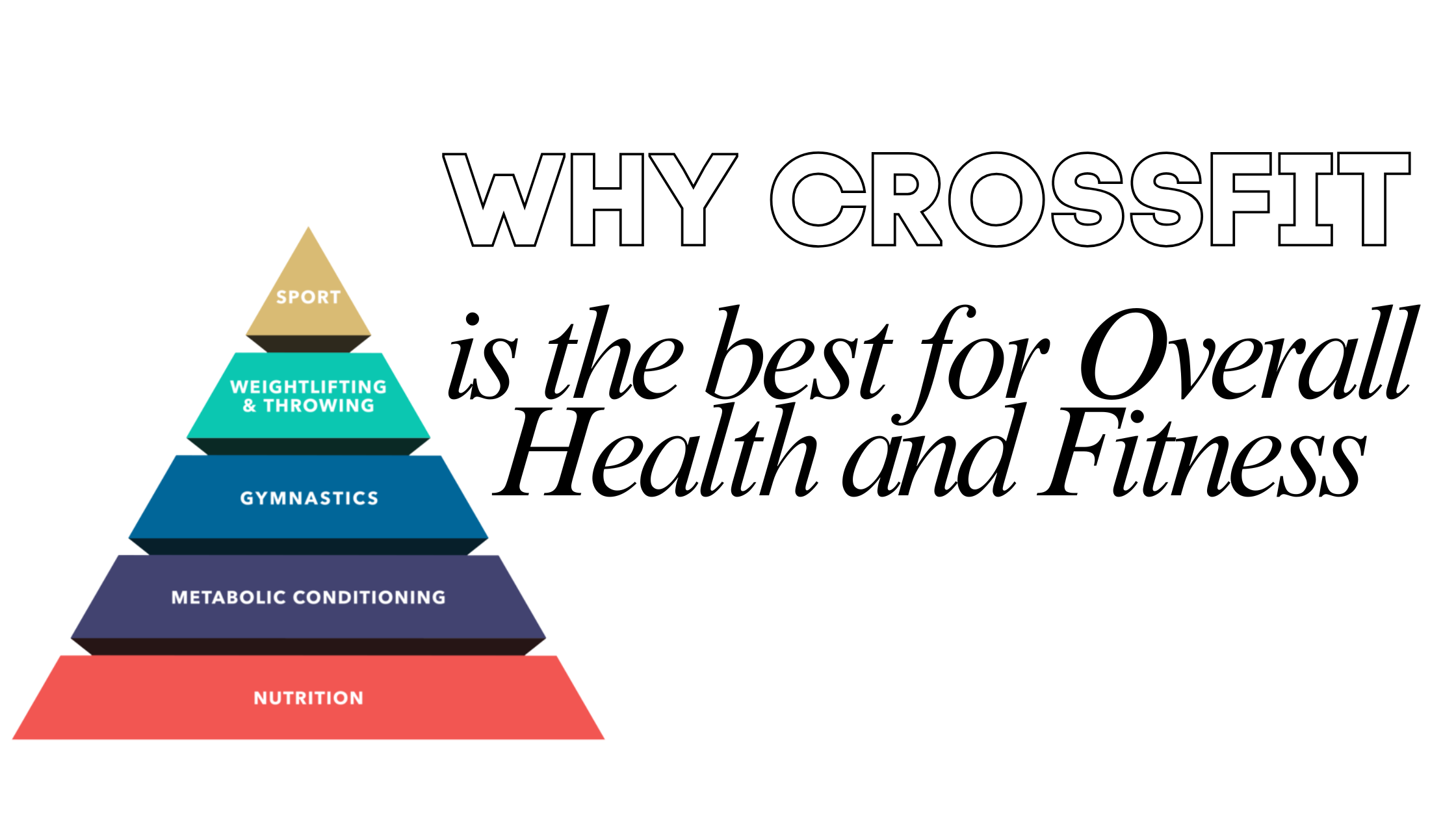
When it comes to long-term health, fitness, and performance, very few training methodologies are as comprehensive and effective as CrossFit. At its core, CrossFit is built on a simple yet powerful framework known as the CrossFit Pyramid, which prioritizes foundational health before progressing toward elite performance.
This pyramid explains why CrossFit works—not just for athletes, but for everyday people who want to live longer, healthier, and more capable lives.
Let’s break down each level of the CrossFit Pyramid and explore how training with mechanics → consistency → intensity leads to sustainable results and lifelong fitness.
1. Nutrition: The Foundation of Health
At the base of the CrossFit Pyramid lies nutrition, because no amount of training can overcome poor fueling.
Nutrition supports:
Body composition
Hormone regulation
Energy levels
Recovery and immune function
In CrossFit, nutrition is simple and effective: eat real, whole foods in appropriate amounts to support activity and health.
Examples:
Prioritizing lean proteins to support muscle and recovery
Eating fruits and vegetables for micronutrients and gut health
Managing carbohydrate intake to fuel training without excess
Avoiding ultra-processed foods that drive inflammation and metabolic disease
Without proper nutrition, progress stalls. With it, everything above the foundation improves.
2. Metabolic Conditioning: Building the Engine
The next level of the pyramid is metabolic conditioning, often referred to as “cardio.” But CrossFit goes far beyond steady-state cardio machines.
Metabolic conditioning improves:
Heart and lung health
Work capacity
Energy efficiency
Longevity and disease prevention
Examples:
Running, rowing, biking, and skiing
Mixed-modal workouts combining monostructural movements with light resistance
Interval training and longer aerobic efforts
CrossFit programs metabolic conditioning across short, medium, and long durations, ensuring athletes are prepared for any physical demand—not just one type of endurance.
A strong engine means you can work harder, recover faster, and stay active as you age.
3. Gymnastics: Mastery of Bodyweight Movement
Gymnastics movements focus on controlling your own body through space, developing relative strength, coordination, balance, and mobility.
These movements are essential for daily life and injury prevention.
Examples:
Squats, lunges, and step-ups
Push-ups, pull-ups, and dips
Planks, handstands, and hanging movements
Gymnastics teaches body awareness and joint control. Before adding load, CrossFit ensures athletes can move well with their own body weight—critical for long-term joint health and functional strength.
4. Weightlifting: Strength and Power
Once movement quality and body control are established, external load is introduced through weightlifting.
Weightlifting develops:
Bone density
Muscle mass
Strength and power
Resilience against aging and injury
Examples:
Deadlifts, squats, presses, and bench presses
Olympic lifts like the snatch and clean & jerk
Dumbbells, kettlebells, and barbells
Strength training is one of the most powerful tools for longevity. CrossFit emphasizes proper mechanics first, ensuring athletes lift safely and efficiently before increasing weight.
5. Sport: The Expression of Fitness
At the top of the pyramid sits sport—the expression of fitness under competitive or high-intensity conditions.
Sport is not just competition; it’s the ability to:
Move well under fatigue
Perform complex skills when tired
Apply fitness in unpredictable environments
Examples:
CrossFit competitions
Local throwdowns
Recreational sports
Challenging workouts that test multiple fitness domains
Sport is optional—but the fitness required to participate improves confidence, mental toughness, and physical capability at any age.
Mechanics → Consistency → Intensity: The Key to Longevity
What truly separates CrossFit from other training programs is its unwavering commitment to doing things in the correct order.
Mechanics – Learn to move correctly
Consistency – Repeat good movement patterns over time
Intensity – Only increase speed, load, or volume once mechanics are sound
This progression:
Reduces injury risk
Builds confidence
Creates sustainable habits
Allows athletes to train for decades, not months
Longevity doesn’t come from avoiding intensity—it comes from earning it.
Why CrossFit Works for Everyone
CrossFit is infinitely scalable. Whether you are:
A beginner starting your fitness journey
A parent trying to stay healthy and energetic
An athlete chasing performance
Someone focused on aging well
The methodology remains the same—only the loads, movements, and intensity change.
By building from the foundation up, CrossFit develops:
Strength
Endurance
Mobility
Coordination
Confidence
All while supporting a long, active, and capable life.
Final Thoughts
CrossFit isn’t random workouts or extreme training—it’s a well-structured system for lifelong health and fitness.
By following the CrossFit Pyramid and respecting the process of mechanics, consistency, and intensity, athletes don’t just get fitter—they get healthier, stronger, and more resilient for the long haul.
That’s why CrossFit isn’t just a workout program.
It’s a framework for living better. up.
Check Out our Weekly Training Highlight Reel Below
Welcome New Members:
Stephanie Hicks
What brought you to CrossFit Bound? (ex: fitness goals, friends, community, challenge, etc.)
Community and fitness goals
What’s your favorite movement or workout so far?
Favorite movement would be squats, box step up, or thrusters.
What’s one thing people might not know about you outside the gym?
I am competitive to a fault. I am my own worse enemy when I feel like I should be more improved or further along than I should be so I get really down on myself.
What do you hope to achieve in your first year with us?
Get my strength back and be more confident in my body.
If you had to describe yourself in one word, what would it be?
Competitive/hard working
Bragging Board:
Sheri Kindred completed her first Pistol Squat
Upcoming Brithdays
Anniversaries
1-year
Eric Ensley
Eric Robinson
Cole & Natalie Scott
Kamila Hernandez
Sabrina Melo
2-year
Randy Joering
Melanie Venable
BAM
Bryan Marichal
3-year
Ruben Rivera
Jeb Buffington
Autumn Ingham
4-year
Jennifer Valenti
6-year
Hunter (Jonathan) Palmer
Birthdays
Sergio Rivera Jan 24
Wilson Washington Jan 24
Ruber Rivera Jan 24
Amber Buettner Jan 29
Upcoming Schedule & Events
February 7th - In House Gymnastics Course with Coach Nicole Corey
10 am to 12 pm *following Morning Class
CROSSFIT OPEN - FEBRUARY 26 through MARCH 16
January 14th is the opening day for registration. Let’s represent this year!
HERE are more details.

Olivia Kates Path 5K in celebration of Olivia Pugh to benefit the Oliva Kate Pugh Strength and Shield Scholarship to Harrison High School Seniors
February 28, 2026 @ 8:30am
CrossFit Journal Article of the Week: “An Invitation to the 2026 CrossFit Open”
By Stephane Rochete, CFL3
Every year, the CrossFit Open, the three-week global competition, allows us to assess our fitness and determine where we stand. Our performance in repeat workouts provides a valuable data point to assess how our fitness has changed (and hopefully improved!) since we last attempted the workout. Areas where we struggle or get stuck during Open workouts provide clues about weaknesses we should address in the coming year. And, of course, the leaderboard gives us insight into how we compare to our peers worldwide and allows us to analyze where we stand with previous years.
These are all compelling reasons to do the Open. Yet there’s another reason for signing up for the Open that just might surpass all the others. As Eric O’Connor so eloquently states in his article “Are You All In? Communicating the Value of Competition to Your CrossFit Members,” “CrossFit competition doesn’t just build better athletes — it forges stronger, healthier, and bolder humans.”
Lest you think this is an exaggeration, especially the “bolder human” part, we need to explore how important it is to regularly do things we find difficult. If we are to develop and improve our mental toughness, confidence, and performance, we have to stretch ourselves by doing what is uncomfortable — doing the things we don’t want to do even though we know they’re ultimately good for us. We have to face our fears head-on. It’s the only way to move the needle.
Maybe even more importantly, though, the Open offers the opportunity to “perform under pressure.” Yes, there is a risk we’ll get stuck on a movement, fail to beat the time cap, or flat-out “choke,” but these risks are precisely why the Open is an excellent opportunity to learn what we’re made of. Uncertain about the outcome, we get to put it all on the line, give our best effort, and see how we perform.
The good news is the result isn’t the most crucial aspect of the workout. It’s not the number of reps or rounds, the loads lifted, or the time to complete that count. What’s truly important is that we show up and leave it all on the gym floor.
Steve Magness’ new book, “Win the Inside Game,” explores the idea that “choking doesn’t occur in private.” Why? Because when we fail publicly — especially in something tied to our identity — our brain panics.
In CrossFit and the Open, performing in front of peers means navigating these mental battles. The fear of missing a muscle-up, failing a lift, or hitting the time cap can trigger doubt. But if we let that fear dictate our actions, we short-circuit mastery.
The Open is our chance to fight back — to do the hard thing despite the fear, embrace the challenge, and walk away stronger, fitter, and prouder of ourselves than before.
This year, we’re faced with another decision: We can choose the pain of discipline — or doing the hard things — or the pain of regret. One of these is rewarded with increased personal satisfaction, confidence, and joy. The other haunts us forever.
So choose wisely this year. Do the hard thing. Have a great Open!