Bound Newsletter 12.14.2025
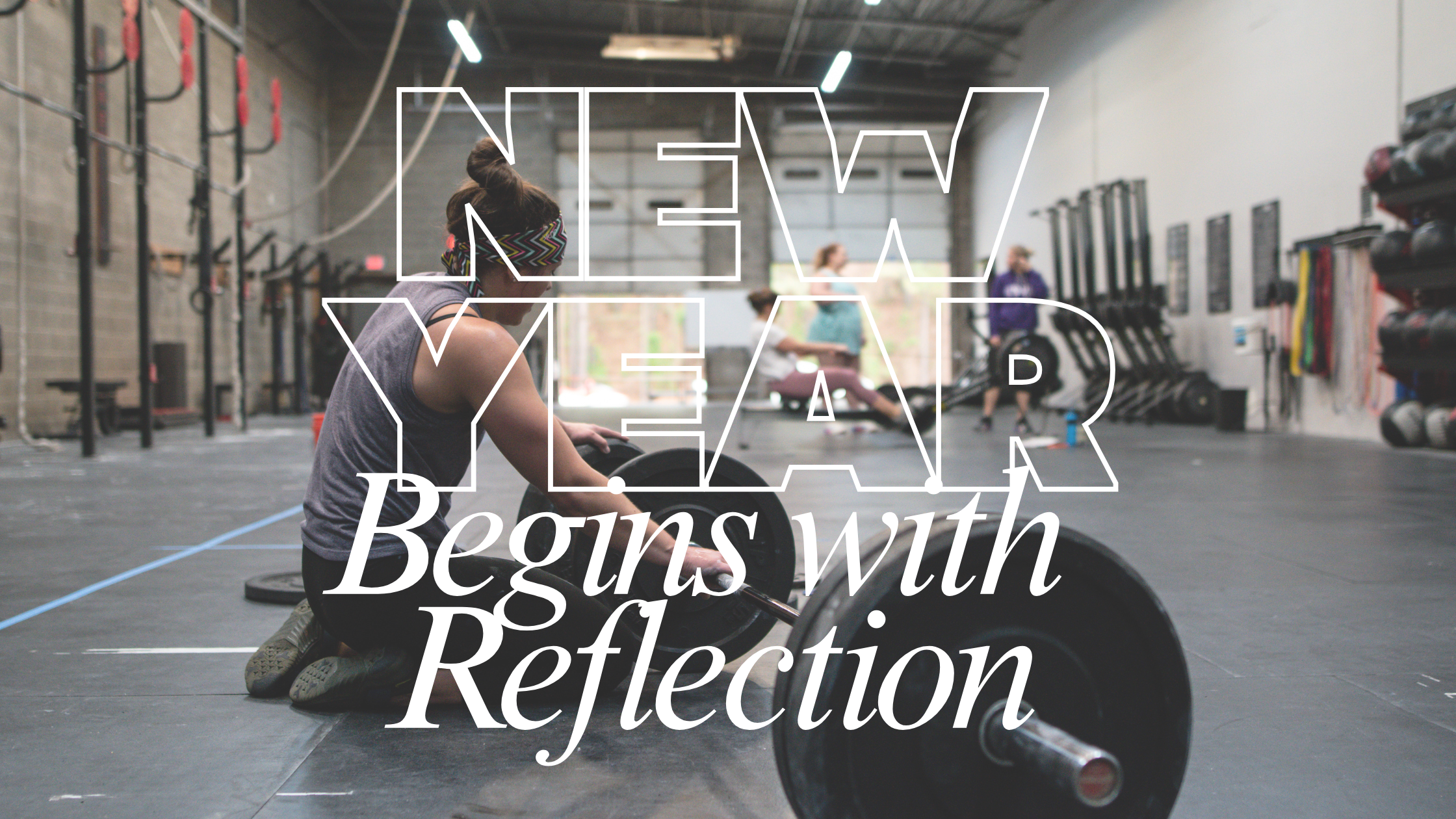
A New Year Begins with Reflection
“We do not learn from experience… we learn from reflecting on experience.”
— John Dewey
The start of a new year always brings a sense of momentum. Fresh calendars. Clean slates. Big goals.
But before we sprint into 2026, it’s worth slowing down for a moment and looking back at 2025—not just the highlights, but the struggles too. Growth doesn’t come from pretending everything went perfectly. It comes from understanding what worked, what didn’t, and why.
Reflection gives direction. Without it, we’re just repeating habits and hoping for different results.
Looking Back on 2025: The Good and the Bad
The Wins
Think about what went well this year:
Did you show up more consistently to training?
Did you get stronger, fitter, or healthier than the year before?
Did you build better routines around sleep, nutrition, or recovery?
Did you make progress in your career or deepen relationships with family?
These wins matter—even if they feel small. Progress compounds when you acknowledge it.
The Challenges
Now comes the harder part:
Where did you fall off track?
What habits didn’t stick?
What stressors—work, family, injuries, time—pulled you away from your goals?
This isn’t about judgment. It’s about honesty. The obstacles you faced in 2025 are clues. They tell you exactly where your plan for 2026 needs to be stronger.
Defining What You Want 2026 to Be
A new year shouldn’t be about “doing more.” It should be about doing better—with intention.
1. Health & Fitness
Ask yourself:
What does healthy actually mean for me right now?
Is it consistency in training?
Getting stronger?
Improving conditioning?
Losing weight or gaining muscle?
Moving pain-free and feeling capable in daily life?
Your fitness goal should support your life—not compete with it.
Example:
“Train 4 days per week for the entire year, focusing on strength, conditioning, and longevity.”
2. Family & Relationships
Fitness doesn’t exist in a vacuum. Neither does success.
Ask:
How present was I with my family in 2025?
Did my schedule align with my values?
Where can I be more intentional—meals together, shared activities, better boundaries with work?
Being fit should give you more energy for the people you care about, not less.
Example:
“Use training as a way to show up more energized, patient, and engaged with my family.”
3. Professional Growth
Your physical discipline often mirrors your professional discipline.
Reflect on:
Did you chase growth or play it safe?
Did you improve skills or stay stagnant?
Did you manage stress productively?
Fitness teaches consistency, resilience, and delayed gratification—qualities that transfer directly into work and leadership.
Example:
“Approach my career with the same structure and consistency I bring to training.”
Creating a 12-Month Plan (Not a 30-Day Resolution)
Most resolutions fail because they’re short-term and emotional. A plan works because it’s structured and realistic.
Break the Year Into Quarters
Think in 12 weeks at a time, not 365 days.
Quarter 1 (Jan–Mar): Foundation
Build consistency
Establish training routine
Dial in basic nutrition and sleep
Quarter 2 (Apr–Jun): Build
Increase training intensity
Set performance goals
Refine habits
Quarter 3 (Jul–Sep): Sustain
Manage fatigue and life stress
Stay consistent during busy months
Focus on recovery and longevity
Quarter 4 (Oct–Dec): Reflect & Refine
Test progress
Adjust goals
Prepare for the next year
Keep the Plan Simple
The best plan is the one you can follow on your worst weeks, not your best.
Schedule training like an appointment
Focus on habits, not perfection
Measure progress monthly, not daily
The Role of Training in Becoming Who You Want to Be
Training is more than exercise.
It’s a daily vote for:
Discipline over convenience
Long-term health over short-term comfort
Confidence over doubt
When you commit to your fitness, you’re not just changing your body—you’re reinforcing the identity of someone who follows through.
Moving Forward Into 2026
As you step into this new year, remember:
You don’t need a perfect plan.
You don’t need endless motivation.
You just need clarity, consistency, and commitment.
Reflect honestly. Decide intentionally. Act consistently.
“Small disciplines repeated daily lead to great achievements.”
— John C. Maxwell
Here’s to a stronger, healthier, and more intentional 2026—in the gym, at home, and in everything you pursue.
Bragging Board

Congratulations to Katherine and Stan on being nominated as the ‘Agent of the Month’ for the Harry Norman Realty Group
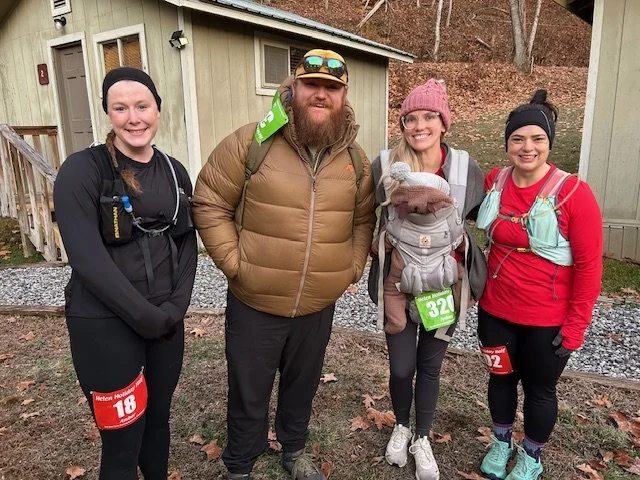
Amber Buettner, Sydney Cody & Silas, & Jen Wells
Amber and Jen both PRd massively with a 4.5 hr time to complete last year to 3:15 (Jen) and 3:18 (Amber).
*Both Amber and Jen are on there way to achieve their goal of Running 365 miles in the year 2025
Natalie Gordon PRd clean and jerk and her thruster!
Upcoming Brithdays
Birthdays
Cris Aponte Dec 15
Caleb Forsyth Dec 15
Susan Asbell Dec 17
Hilary Maloney Dec 18
Jermaine Johnson Dec 22
Matt Gray Dec 26
Dylan Porter Dec 27
Walter Davila Dec 28
Noe Ruiz Dec 28
Brittany Ringrose Dec 30
Upcoming Schedule & Events
Holiday / Christmas Schedule
December 24/25
closed
December 26
8 & 9 am only
December 27
9 am
December 31
5:30,6:30,9am, and 12pm classes
no evening classes
January 1st
9 am and 12 pm classes
January 10th - Onward “Shoulder Mobility Clinic” with Kristin Humphries
10 am to 12 pm *following the morning class
February 7th - In House Gymnastics Course with Coach Nicole Corey
10am to 12 pm *following Morning Class

Olivia Kates Path 5K in celebration of Olivia Pugh to benefit the Oliva Kate Pugh Strength and Shield Scholarship to Harrison High School Seniors
February 28, 2026 @ 8:30am
CrossFit Journal Article of the Week: Don't Eliminate CrossFit Movements As You Age (Do This Instead)
By Stephane Rochet, CF-L3
There’s a disturbing trend in fitness content right now: endless lists telling you which exercises to eliminate based on your age.
If you’d rather watch/listen to this conversation, you can do that here.
“The only five exercises you need after 40.” “Don’t do these movements after 50.” “If you’re a female over 40, avoid these exercises.”
The message is clear: as you age, you need to start whittling down your movement vocabulary. First, you drop this exercise, then that one, gradually restricting your physical capabilities until, by logical conclusion, you’re doing absolutely nothing at all, and then you die.
That seems to be the plan. And it’s terrible advice.
The Real Message: Introducing Danger
Let’s be honest about what these lists are actually saying. It’s not that these movements suddenly stop being effective the day you turn 50. Your biology and physiology don’t magically change between 49 and 50.
What they’re really saying is: these movements are dangerous for you now.
You could get hurt. We don’t want any risk as we get older because injuries when you’re older can be devastating. Better to just stop doing challenging movements entirely.
I’ll agree with one thing: injuries when you’re older do suck. They take longer to recover from. But injuries suck at any age. We’re always trying to avoid injury, regardless of how old we are.
The question is: should we avoid injury by eliminating movements, or by being smarter about how we approach them?
The Problem Isn’t the Movements
The movements aren’t dangerous. Full stop.
What you might need as you age is to be more mindful about:
Technique – controlling movement quality with precision
Load management – smart decisions about weight and volume
Frequency – how many days per week you work out
Movement balance – how you program different patterns throughout the week
Daily readiness – checking in with yourself about what you’re actually prepared to do today
These principles don’t change as you age. If anything, you’ve been applying them to your entire training life. The movements themselves don’t need to change, but how you execute them might require more attention.
You might have to check in with yourself more frequently. Your readiness might fluctuate more day-to-day than it did when you were younger. What you were prepared to do yesterday might not be what you can handle today.
But that’s about mindfulness and adjustment, not elimination.
The Category vs. The Movement
There’s an important distinction here: we’re talking about eliminating entire movement categories, not adjusting individual exercises.
Movement patterns like:
Overhead movements
Squatting patterns
Deadlifting/hinging patterns
Pressing movements
If there’s a specific individual movement within a category that’s problematic for you, whether that’s due to an injury, a limitation, or something else, fine. Adjust that specific movement.
But don’t throw out the entire category. If one overhead movement doesn’t work for you, find another overhead movement that does. The pattern itself is essential.
Building Your Hedge
Here’s what many people don’t understand about maintaining complex movements as you age: they’re not just about physical capability in the moment. They’re insurance for your future.
Think about it this way: if you can still do a handstand push-up at 60 or 65, you’re probably functioning pretty well overall. That single movement requires shoulder strength, core stability, balance, spatial awareness, and confidence. It’s a marker that tells you, “I’m doing OK right now.”
And “doing OK right now” means you’re a long way from the real danger — falling, breaking a bone, ending up in a chair unable to recover.
The person who can overhead squat with a PVC pipe at 90 years old is living a completely different quality of life than the person who eliminated overhead squatting at 45.
That’s a 45-year difference. Think about what that compounds to.
The Compounding Effect of Elimination
If you start scrapping movements at 40, 45, and 50, and you live to 70, 80, or 90, we’re talking about potentially 40 years without performing those movement patterns.
How different is your quality of life compared to someone who kept doing them?
CrossFit’s mission is to increase your work capacity to the highest level possible, for as long as possible. That means building a hedge or maintaining the ability to perform foundational movements regardless of weight, reps, or speed.
Notice that we haven’t discussed numbers. We’re not saying you need to back squat 300 lb at 70 years old. We’re saying you need to maintain the movement pattern even if it’s with a PVC pipe, even if it’s bodyweight only, and even if it takes you all day.
The pattern is what matters for longevity.
The Longevity Component
There’s a real longevity component to being able to perform challenging, complex movements. These are exactly the movements people are telling you to eliminate from your program.
Can you:
Pick something off the ground correctly?
Get something overhead?
Squat to depth?
Perform an inverted movement?
Maintain balance in challenging positions?
These aren’t gym exercises; these are life movements. The ability to perform them is a signal of overall function, and the inability to perform them is a warning sign.
When you eliminate these patterns from your training, you’re not just losing the specific movement; you’re losing everything that movement represents in terms of overall capability.
Don’t Be So Quick to Substitute
Here’s where a lot of well-meaning advice goes wrong. Someone might say, “Don’t deadlift after 50; do Romanian deadlifts instead.”
RDLs are great. Genuinely useful. But here’s the better approach: do both.
Don’t be so quick to scrap front squats and back squats for rear-foot elevated split squats. Split squats are excellent. Include them. But keep the foundational movements too.
The trend is to eliminate the foundational movement in favor of a “safer” variation. But the foundational movement is what maintains the full pattern. The variation is supplementary.
You don’t have to choose one or the other. Do them all. Just be smart about load, volume, and frequency.
What to Keep
CrossFit has a foundational movement series that gives you a clue about what to maintain:
The Squatting Series
Air squat
Front squat
Overhead squat
Back squat
The Deadlift Series
Deadlift
Sumo deadlift
Medicine-ball clean
The Pressing Series
Press
Push press
Push jerk
Split jerk
These foundational versions should stay in your training. Yes, add variations. Yes, adjust the load. Yes, be mindful of volume and frequency.
But don’t eliminate them.
How to Approach Movement as You Age
Instead of asking, “What should I eliminate?” ask, “How can I keep doing this movement?”
The answer might involve:
Reducing load
Adjusting volume
Modifying frequency
Improving technique
Building supplementary strength
Adding more mobility work
Programming smarter progressions
But the answer shouldn’t be to stop doing it entirely.
The moment you stop practicing a movement pattern, you begin losing it. Learned non-use can have devastating consequences for activities of daily living. Additionally, once you’ve lost it for long enough, getting it back becomes exponentially harder, potentially impossible.
The Real Risk
Here’s what the “don’t do these exercises” crowd gets wrong: they think they’re reducing risk by eliminating movements.
But they’re actually creating a different, more insidious risk — the risk of accelerated decline.
Every movement pattern you eliminate narrows your physical capability. Every category you remove from your training makes you less prepared for the demands of life. Every foundational movement you scrap moves you closer to the chair.
The real risk isn’t that you might get hurt doing a deadlift at 60. The real risk is that you’ll be 75 and unable to pick your grandchild up off the floor because you haven’t practiced that movement pattern in 15 years.
CrossFit Health Is for Your Lifetime
This isn’t about chasing performance in your 70s or 80s. It’s not about setting PRs at 90.
It’s about maintaining capability, preserving independence, and building enough of a hedge that when age inevitably reduces your capacity, you’re starting from such a high level that you can afford the decline and still function well.
The person who maintains foundational movement patterns, even at reduced loads, builds a completely different trajectory than the person who systematically eliminates them decade by decade.
The Bottom Line
Don’t be so quick to eliminate movements as you age.
Yes, be smarter, be more mindful, adjust load and volume, listen to your body, and modify when necessary. But keep the patterns, maintain the foundations, and build the hedge.
If you can still overhead squat, front squat, deadlift, and do handstand push-ups at 65, even if it’s with minimal load, you’re probably doing OK. Better than OK, actually; you’re thriving.
So the next time you see a list telling you what exercises to eliminate at your age, ignore it.
Focus instead on how to keep doing all of them — safely, smartly, sustainably — for as long as possible.
Your 90-year-old self will thank you.