Bound Newsletter 2.21.2026
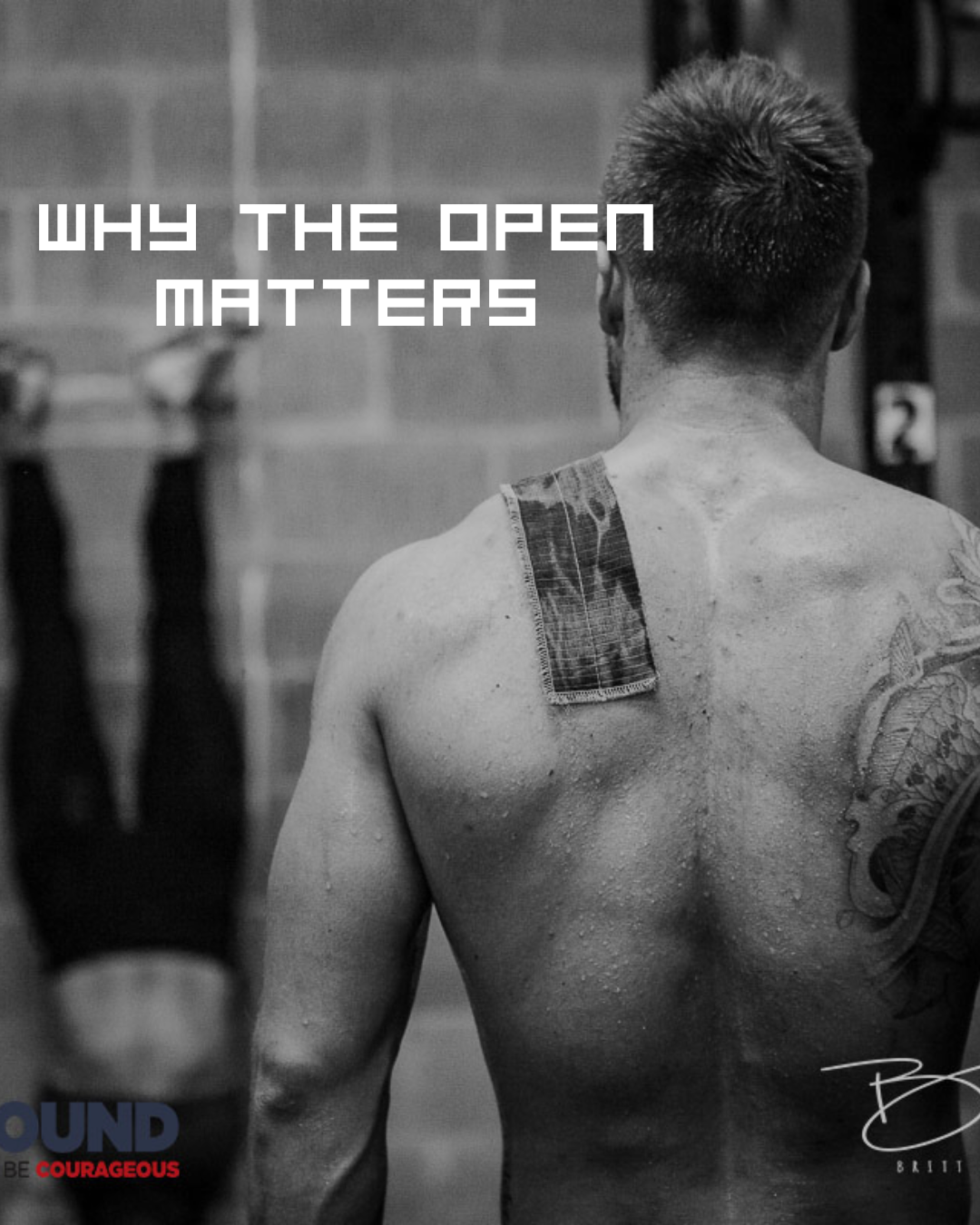
Why the CrossFit Open Matters
Every year, for a few weeks, something shifts inside CrossFit gyms around the world.
Friday nights get louder. High-fives get stronger. The whiteboard matters a little more. People push a little harder.
The CrossFit Open isn’t just an online competition.
It’s a reminder of who we are as CrossFitters.
1. It Strengthens Our Community
The Open has a unique way of bringing everyone together.
In a regular class, you might work out beside someone and exchange a quick fist bump before heading home. During the Open, you judge each other’s reps. You cheer until you lose your voice. You stay late. You help set up. You celebrate PRs that aren’t even your own.
The Open creates shared struggle.
And shared struggle builds connection.
It doesn’t matter if you’re a seasoned competitor or this is your first year doing scaled workouts. Everyone is on the floor together. Everyone is a little nervous when the workout is announced. Everyone is giving their best effort.
For a few weeks, the gym feels even more united. And that unity carries far beyond the Open season.
2. It Shows You the Results of Your Training
The Open is a test.
Not of whether you’re the fittest in the world—but of whether you’re fitter than you used to be.
Maybe last year you couldn’t do a pull-up, and this year you get your first one under pressure.
Maybe you had to scale the workout in the past, and now you can do it RX.
Maybe you move better, recover faster, or stay mentally tougher when things get uncomfortable.
The Open puts your training on display.
All those early mornings.
All those heavy squats.
All those workouts you didn’t feel like doing.
This is where you see the payoff.
It gives you data. It gives you perspective. And it reminds you that consistency works.
3. It Motivates You to Keep Showing Up
There’s something powerful about having a defined challenge.
When you know the Open is coming, your training has purpose. When you’re in the middle of it, your effort has urgency. And when it’s over, you have clarity on what to improve.
The Open exposes weaknesses—but that’s a gift.
If double-unders tripped you up, you now have a reason to practice them.
If heavy barbell cycling slowed you down, you know what to focus on.
If nerves got the best of you, you’ve learned something about your mindset.
The Open doesn’t just measure fitness. It builds momentum.
It gives you a reason to keep training through the year—not randomly, but intentionally.
4. It Reminds Us Why We Do This
At its core, CrossFit isn’t about rankings or leaderboards.
It’s about growth.
Growth as an athlete.
Growth as a teammate.
Growth as a person.
The Open challenges you physically—but it also challenges your courage. You sign up. You put your score on the board. You let others watch you struggle. You try anyway.
That takes humility and confidence at the same time.
And that’s what makes it powerful.
The CrossFit Open matters because it reinforces everything we value:
Community.
Accountability.
Measurable progress.
Showing up when it’s hard.
Whether you finish first in the gym or last, whether you go RX or scaled, whether you hit a PR or learn a hard lesson—the Open is an opportunity.
An opportunity to test yourself.
To support others.
To grow.
And that’s what being a CrossFitter is all about.
In case our members forget this is from last weeks newsletter on how to keep score and TEAMS LIST
How to Win the CrossFit Bound Intramural Open
So How Do You Actually Win?
You win by:
✔ Showing up every week
✔ Getting judged and judging others
✔ Submitting scores on time
✔ Bringing the loudest cheering section
✔ Finishing strong in Week 3
It’s not just about PRs.
It’s about consistency.
It’s about team culture.
It’s about community.
What This Really Means
The Intramural Open isn’t designed to crown the fittest individual.
It’s designed to build the strongest gym.
For three weeks, every athlete matters.
Every judge matters.
Every cheer matters.
And every rep counts.
The Leaderboard Will Move.
The Energy Will Rise.
And One Team Will Take It All.
Which team will it be?
That part’s up to you.
Let the games begin. 💪
(It’s Not What You Think)
The teams are set.
The workouts are coming.
The leaderboard is ready.
But before Week 1 kicks off, let’s talk about how this thing is actually won.
Because here’s the truth:
The Intramural Open is NOT just about who can lift the most or move the fastest.
It’s about who shows up.
Who supports.
Who brings the energy.
And who understands how the scoring system works.
Let’s break it down.
🏋️ 1. Performance Points
Yes — performance matters.
Each week, athletes earn points based on placement in the gym:
1st -10 pts
2nd - 9 pts
3rd - 8 pts
4th - 7 pts
5th - 6 pts
6th - 5 pts
7th - 4 pts
8th - 3 pts
9th - 2 pts
10th - 1 pts
If you finish high, your team benefits.
But here’s the twist…
Performance points are only part of the equation.
🙌 2. Participation Points (Where Championships Are Won)
Every athlete can earn up to 25 points per week just by being involved.
You earn points for:
Completing the workout - 5 pts
Judging another athlete - 5 pts
Attending Friday Night Lights - 5 pts
Submitting your score on time - 5 pts
Registering for the Open - 5 pts
That means someone who finishes mid-pack but does all five of those things can outscore someone who wins the workout but skips judging or FNL.
Let that sink in.
You don’t have to be the fittest athlete in the gym to be the most valuable to your team.
🎉 3. Spirit & Energy Points
Every week, coaches award bonus points for:
Best team energy
Best theme or costumes
Best sportsmanship
Weekly team challenges
If your team brings the noise, dresses the part, and supports every heat — you’ll see it reflected on the leaderboard.
Energy is strategic.
🔥 Week 3 Changes Everything
Just when you think the standings are locked in…
Week 3 scores are multiplied by 1.25x.
That means no team is safe.
And no team is out.
Everything is still in play until the final workout.
Bragging Board:
Sheri completed 4 Bar Muscle Ups
Dylan Porter set another PB with a Power clean and Jerk of 300lbs
Emily Conaster with a 105lb Snatch
Brian Lawler connected with a 205lb Split Jerk
Casey Linch with a 190lb Split Jerk
Fatih Sen realizing his new-found ‘dad strength’ with a 140lb Split Jerk
Natalie Gordon is still raising the bar with a 140lb Split Jerk & 150lb Squat Clean
Hannah Spratlen hitting a 130lb Split Jerk
Abby Gerleman - 145lb Split Jerk
Check Out our Weekly Training Highlight Reel Below
Upcoming Brithdays & Anniversaries
Anniversaries
5-Years
- Brian Chambers Feb 22
4-Years
- Hilary & Trevor Maloney Feb 14
3-Years
- Ruben Rivera Feb 3
2-Year
- Greg Dafini Feb 12
- Jim Blackhall Feb 15
1-Year
- Elaine Dunbar Feb 7
- Sam Porter Feb 20
- Paulette Colon Feb 28
- Sabrina Melo Feb 2
Birthdays
Miles Pettit Feb 26
Upcoming Events & Clinics
CROSSFIT OPEN - FEBRUARY 26 through MARCH 16
- Jan 14th is the opening day for registration. Let’s represent this year!
- HERE are more details.
Barbell Club starts back on Thursday February 19th
Bound Run/Sprint Club meeting at 7:30am on Saturday mornings
Friday Night Lights
Feb 27
March 6
March 13
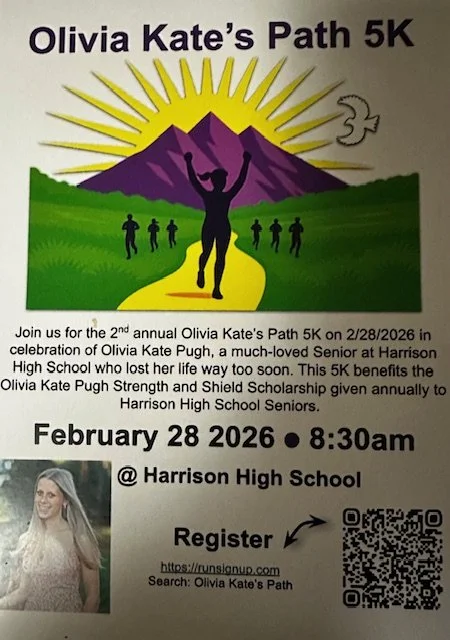
Olivia Kates Path 5K in celebration of Olivia Pugh to benefit the Oliva Kate Pugh Strength and Shield Scholarship to Harrison High School Seniors
February 28, 2026 @ 8:30am
Sign Up By Following this LINK
Article of the Week: Getting Off the Crack
By Nicole Carroll — CrossFit Journal, October 2005
In Getting Off the Crack, Nicole Carroll shares her personal experiment with the Zone diet — a nutritional strategy prescribed by CrossFit that balances protein, carbohydrates, and fat in measured “blocks.” At first, she was skeptical about the effect diet could really have on performance and health. She considered herself already fit and able to eat whatever she wanted.
Carroll committed to the Zone diet for a short trial, precisely measuring her food intake. Over the next four weeks, she noticed dramatic improvements in her fitness: she lost fat, gained muscle, hit personal records, improved benchmark workout times, and recovered faster after training. She also experienced greater emotional balance, more energy, and a heightened sense of mental sharpness.
However, the journey wasn’t easy. The first weeks were marked by hunger, cravings, and frustration, especially as she adjusted to fewer carbohydrates — which she likened to “kicking a crack habit.” This comparison highlights how difficult but transformative changing one’s dietary habits can be.
Ultimately, Carroll found that once she committed and adjusted her food proportions properly (especially adding more healthy fats), the benefits far outweighed the struggle. Her experience reinforced a core CrossFit principle: doing the work precisely — whether in training or nutrition — produces meaningful results.
Key takeaway:
Nutrition matters just as much as training. Sticking with a well-designed nutritional approach like the Zone — even through the hard early weeks — can significantly improve performance, recovery, body composition, and overall well-being.
Recipe of the Week: Lemon Garlic Chicken Power Bowl
👨🍳 Instructions
Season the chicken with salt, pepper, paprika, oregano, garlic, and lemon juice.
Heat 1 tablespoon olive oil in a skillet over medium heat.
Cook chicken 5–7 minutes per side until internal temp reaches 165°F. Let rest before slicing.
In the same pan, add remaining olive oil and sauté zucchini and peppers for 3–4 minutes.
Add spinach and cook until just wilted.
Build your bowl:
Base of sautéed vegetables
Sliced chicken on top
Fresh tomatoes and avocado
Sprinkle almonds if desired
📊 Approximate Macros (Per Serving)
Protein: 45–50g
Carbohydrates: 15–18g (primarily from vegetables)
Fat: 22–28g
Calories: ~450–500
Balanced. Satiating. Performance-driven.
💡 Why This Works
High protein preserves lean muscle.
Low-glycemic vegetables keep insulin stable.
Healthy fats support recovery and hormone regulation.
Minimal processed carbs = steady energy, fewer crashes.
As Nicole Carroll emphasized in Getting Off the Crack, precision and consistency matter. When you control your nutrition the way you control your reps, results follow.
If nutrition drives performance, then your meals should support recovery, muscle growth, and stable energy.
This bowl is built around:
High protein for muscle repair
Low carbohydrates from vegetables
Moderate healthy fats for hormone balance and satiety
Simple. Measurable. Effective.
🥩 Ingredients (Serves 2)
Protein
2 boneless, skinless chicken breasts (6–8 oz each)
Vegetables (Low-Carb Base)
2 cups zucchini, sliced
1 red bell pepper, sliced
2 cups spinach
1 cup cherry tomatoes
Healthy Fats
1 medium avocado, sliced
2 tablespoons olive oil
1 tablespoon raw almonds (optional crunch)
Flavor
3 cloves garlic, minced
Juice of 1 lemon
1 teaspoon paprika
1 teaspoon sea salt
½ teaspoon black pepper
½ teaspoon oregano