Bound Newsletter 4.19.2026
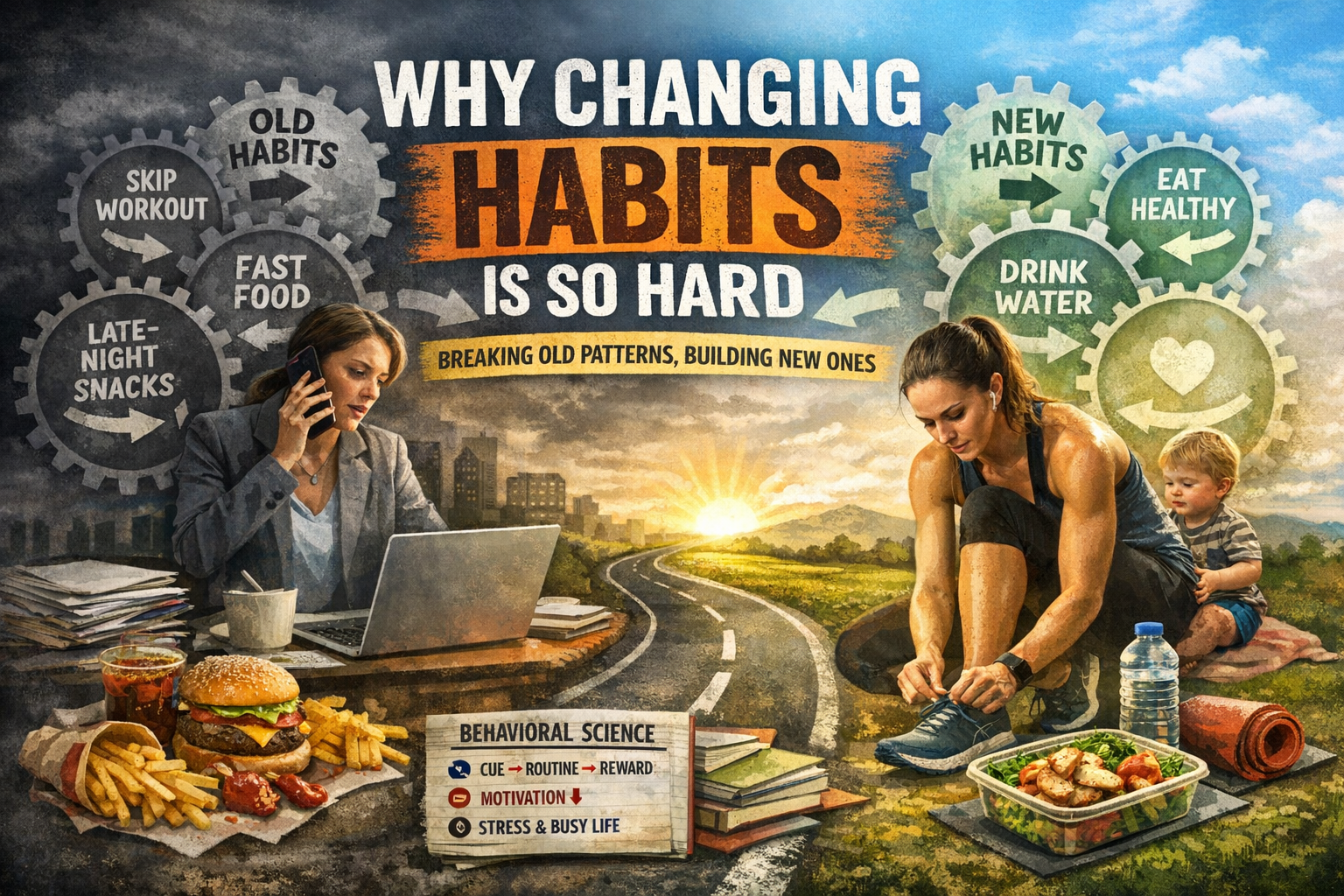
Why Changing Habits Is So Hard (And How to Actually Make It Work)
For busy parents, professionals, and anyone trying to improve their health
We all know what we should do.
Eat better. Exercise regularly. Get more sleep. Drink more water.
But knowing and doing are two very different things.
If you’ve ever tried to start a new routine—meal prepping, waking up early to train, or cutting out late-night snacking—you’ve likely felt the friction. That internal resistance. The inconsistency. The “I’ll start again Monday” cycle.
You’re not alone—and more importantly, you’re not failing.
You’re running into how human behavior actually works.
The Science Behind Why Habits Are Hard to Change
Social scientists have spent decades studying behavior change, and one of the most widely cited researchers, Dr. Wendy Wood (USC), found that about 40-50% of our daily actions are habits, not conscious decisions.
That means nearly half of what you do each day is automatic.
Habits are formed through a loop:
Cue (trigger)
Routine (behavior)
Reward (result)
Over time, your brain wires these loops to conserve energy. Once a habit is formed, it lives in a part of the brain that operates with very little conscious effort.
That’s great when the habit is positive—like brushing your teeth.
But it’s a problem when the habit is:
Skipping workouts after work
Grabbing fast food on the way home
Reaching for snacks when stressed
Because now you’re not just making a decision—you’re trying to override a deeply ingrained neurological pattern.
Why Motivation Isn’t Enough
Another key insight comes from Dr. BJ Fogg (Stanford Behavior Design Lab):
“Behavior happens when motivation, ability, and a prompt come together at the same time.”
Most people rely heavily on motivation.
But motivation is inconsistent—especially when:
You didn’t sleep well
Work was stressful
Your kids need attention
Your schedule is packed
This is why even the most driven people struggle with consistency.
It’s not about wanting it more. It’s about making it easier to do.
The Reality of Busy Lives
If you're a parent or working professional, your day is already full of demands:
Early mornings
Work deadlines
Family responsibilities
Limited downtime
Trying to “add” a perfect nutrition plan and a 90-minute workout routine on top of that often leads to burnout.
Research from the American Psychological Association highlights that stress significantly reduces self-control, making it harder to stick to new behaviors—especially ones that require effort like exercise or meal prep.
So when life gets busy (which it always does), your brain defaults to what’s easiest and most familiar.
That’s not laziness—that’s biology.
Why Old Habits Stick Around
Habits don’t disappear—they get replaced.
Studies show that even when you stop a behavior, the neural pathways remain. That’s why old habits can resurface during stressful periods.
For example:
You eat clean all week → stressful Friday → back to old eating patterns
You train consistently → busy week → workouts disappear
Your brain is simply reverting to what it knows best.
The Shift: Small Wins Over Big Changes
If big, dramatic changes don’t stick… what does?
Research consistently points to one answer:
Start smaller than you think you need to.
A study published in the European Journal of Social Psychology found that habit formation takes anywhere from 18 to 254 days, depending on the behavior and the individual.
That means consistency—not intensity—is what matters most.
Practical Strategies That Actually Work
1. Lower the Barrier to Entry
Instead of:
“I’ll work out 5 days a week for an hour”
Try:
“I’ll train for 20 minutes, 3 days a week”
Consistency builds identity. Identity builds long-term change.
2. Attach New Habits to Existing Ones
This is called habit stacking.
Example:
After I make coffee → I drink a glass of water
After I put the kids to bed → I prep tomorrow’s lunch
After work → I go straight to the gym (no stops)
You’re using an existing habit as a trigger.
3. Focus on Environment, Not Willpower
Make the right choice the easy choice:
Keep healthy food visible and accessible
Pack your gym bag the night before
Remove junk food from your immediate environment
Behavior is heavily influenced by what’s around you.
4. Redefine Success
Success isn’t perfection.
It’s:
Showing up when you don’t feel like it
Doing something instead of nothing
Staying consistent through imperfect weeks
5. Expect Resistance (and Plan for It)
You will have:
Busy weeks
Missed workouts
Off-track meals
The difference between success and failure isn’t avoiding these moments—it’s how quickly you return.
Bringing It Back to Fitness & Nutrition
At CrossFit Bound, we see this every day.
People don’t struggle because they don’t care.
They struggle because:
They try to do too much too fast
They rely on motivation instead of structure
They don’t account for real life
The most successful members aren’t the ones who go all-in for two weeks.
They’re the ones who:
Show up consistently
Build habits slowly
Adjust when life gets busy
Lean on community for accountability
Final Thought
Changing habits isn’t supposed to be easy.
If it feels hard, that means you’re working with your biology—not against it.
The goal isn’t to flip a switch overnight.
It’s to build a system that works even when life gets chaotic.
Start small. Stay consistent. Keep showing up.
That’s how real change happens.
Ready to build habits that actually stick?
Join us at CrossFit Bound and experience training designed for real life—busy schedules, families, and everything in between.
Bragging Board
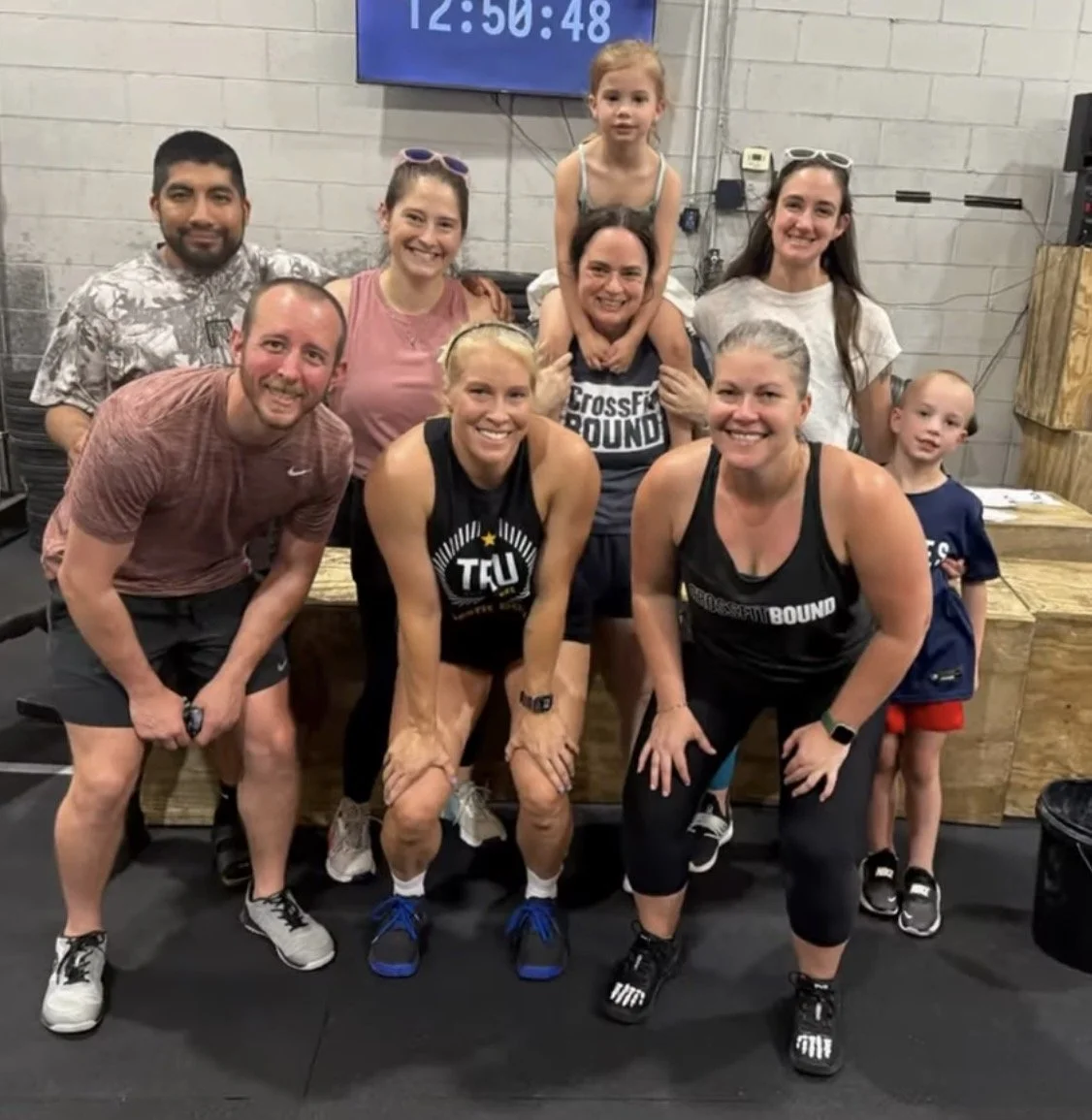
Congratulations to Randy, Mary, and Laura on all three placing top 3 in the Tru Challenge Competition at the Garage in Woodstock this weekend
Big shout out to the support crew and Coach Jen Wells helping the team compete and put together strategies for each event.
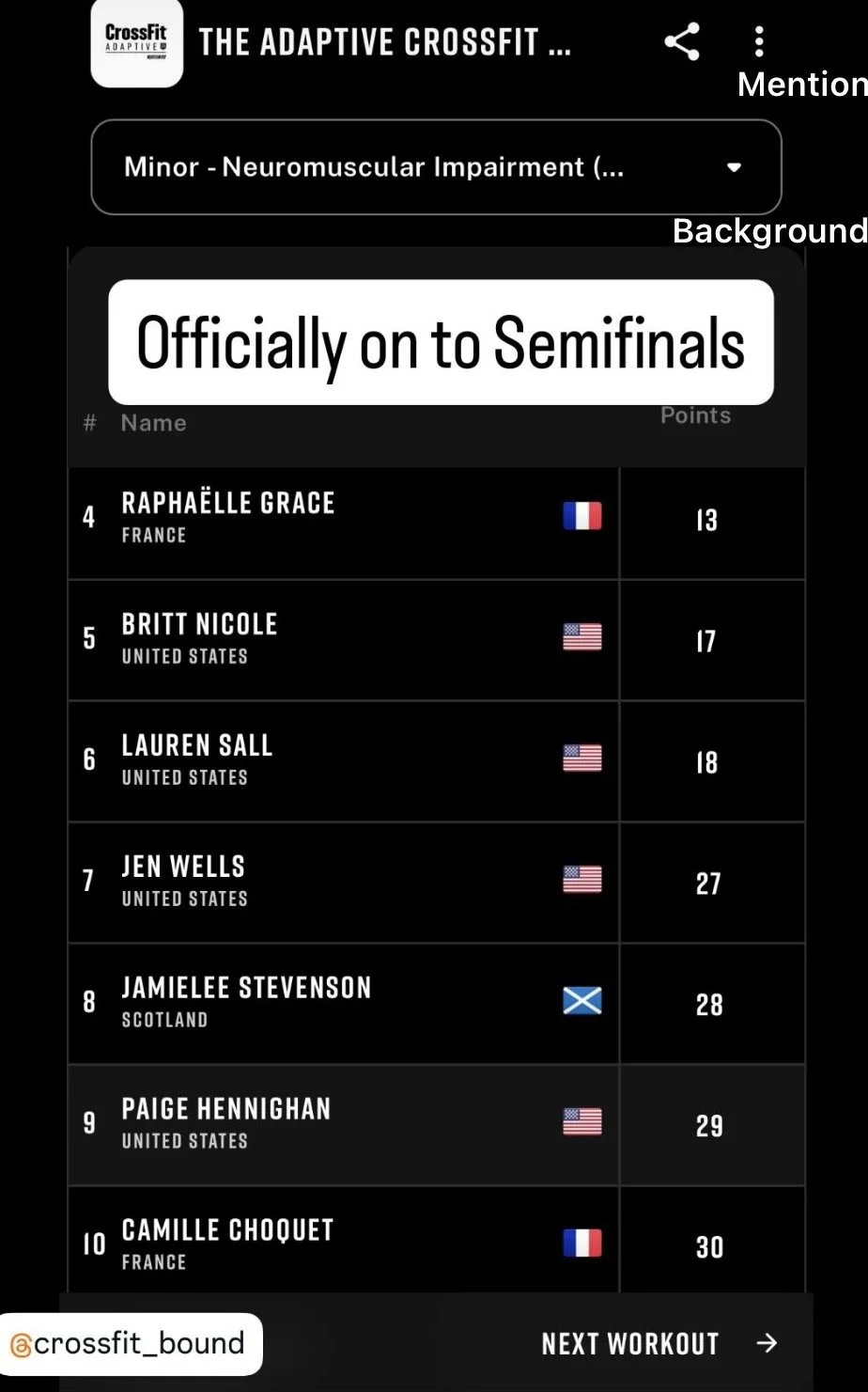
Congratulations to Dr. (& Coach) Jen Wells on qualifying for the semi finals again!!
2026 Hero Month shirts order must be in this week by the 25th
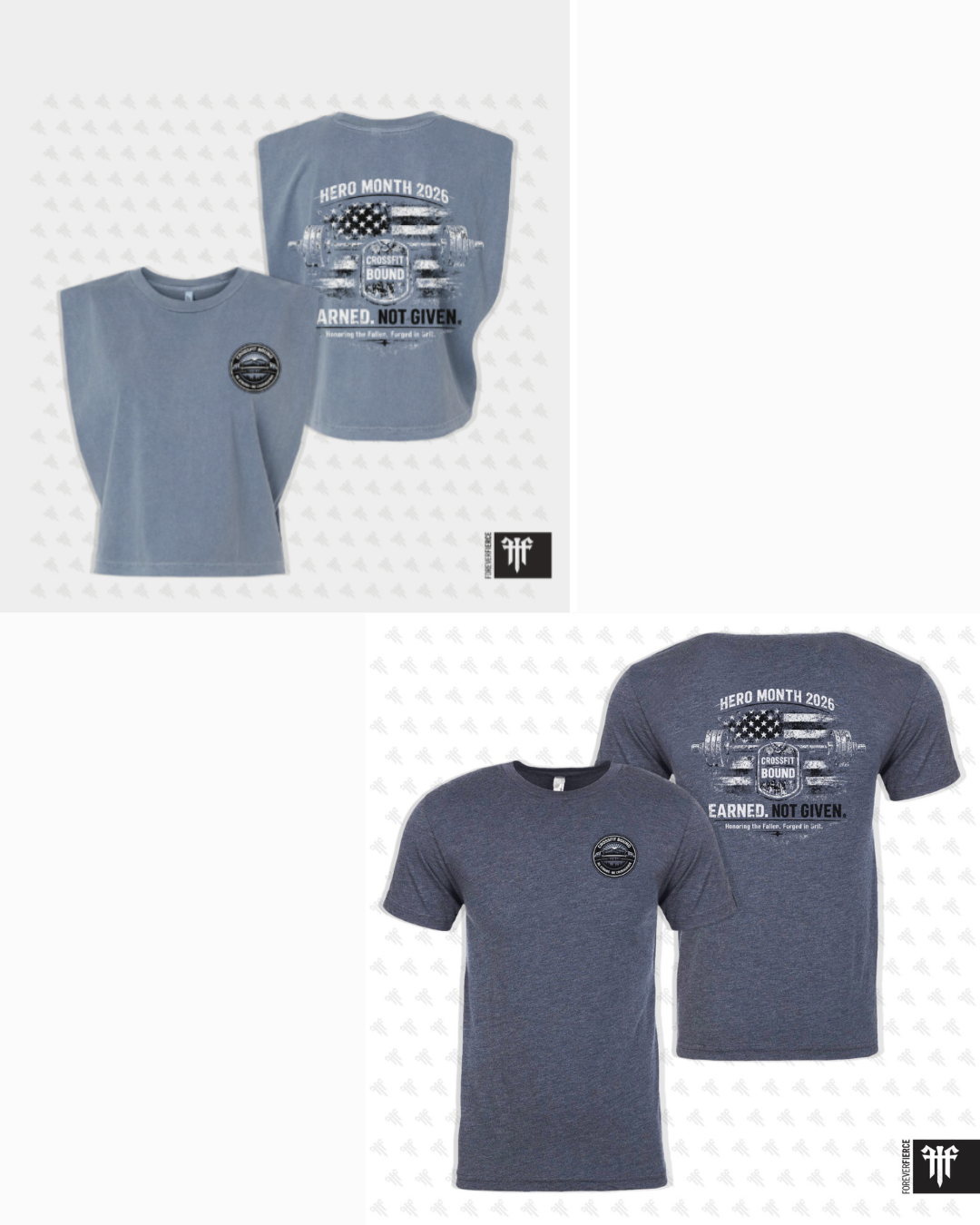
Here is our 2026 Hero Shirts - I have samples in the front area hanging on the bottom right Tshirt rack for you to look at to determine the size you may need. These are available for pre-order through wodify (you can purchase directly through app under the ‘buy’ tab on home screen).
We will have the navy blue for both womens crop tops and a tri blend t shirts.
Any questions please reach out to info@crossfitbound.com
Deadline to order is April 25th
Crop Tops - $32.99
Tri Blend Tshirts - $29.99
Weekly Training Highlight Reel is in the Works
Member Vault Section “Performance Tools & Resources” Section is now live
This section is built for one purpose:
To help you move from just showing up… to training with intention.
What You’ll Find Inside
🏋️♂️ Lift Percentage Chart
Use your numbers to determine the right weights, track progress, and identify strengths and weaknesses.
🏃 Running & Conditioning Charts (Coming Soon)
We’re building tools to help you improve your engine with:
• pacing guides
• interval training
• aerobic vs anaerobic zones
• VO₂ max development
📄 Workout PDFs & Programs
Extra structure when you want it:
• gymnastics & bodyweight programs
• endurance training plans
• strength programs (coming soon)
Why This Matters
The biggest difference between people who plateau and people who improve is simple:
👉 They track and follow a plan
These tools give you:
• direction inside and outside the gym
• structure to your training
• a way to measure real progress
How to Use It
Start simple:
Check your lift numbers using the percentage chart
Pick one area you want to improve
Use the resources to support your training
You don’t need to use everything.
You just need to start using something.
Who This Is For
Beginners:
Learn how to track progress and understand your numbers
Experienced Athletes:
Dial in weaknesses and train with more precision
Final Thought
We don’t just want you working out.
We want you:
• improving
• progressing
• training with purpose
Head to the Member Vault and check out the new section. If you have not recieved the password email info@crossfitbound.com to getit
Upcoming Brithdays & Anniversaries
Anniversaries
9-Years
Alex & Meg Willis April 3
5-Years
Brooklyn Shaw April 14
Laura Rutland April 28
2-Year
Kalob Apodaca April 2
Birthdays
Sabrina Melo April 20
Nick Hadley April 23
Mary Lubbers April 24
Ken Wysocki April 25
Missy Ureda April 26
Upcoming Events & Summer Kids Class
HERO MONTH begins May 1st
be sure to write down your the Hero WOD you want to do and the Hero Wod you do not want to do on the white board in the gym.
Hero Shirts are available for Pre-order as well in the front on wodify.
☀️ CrossFit Bound Kids Summer Classes – Starting June 2–3! ☀️
Keep your kids active, confident, and having fun all summer long with our CrossFit Bound Kids program! These classes are designed to build coordination, strength, and confidence through age-appropriate fitness, games, and movement.
Mini Movers (Ages 3–5)
A fun and energetic introduction to movement! Kids will learn basic motor skills, balance, coordination, and body awareness through games and structured play.
🗓 Wednesdays: 10:15–11:00 AM
💲 $85/month or $150 for the full summerJunior Jumpers (Ages 6–12)
Perfect for developing strength, fitness, and confidence! These classes introduce foundational CrossFit movements, teamwork, and discipline in a fun, supportive environment.
🗓 Tuesdays & Wednesdays: 9:00–10:00 AM
💲 $120/month or $200 for the full summerSpots are limited—secure your child’s place by using the QR links below and give them a summer full of movement, growth, and fun!

Age group 6-12 yrs old - Junior Jumpers - will meet Tuesday & Wednesdays from 9-10am.
Cost is $120 monthly or $200 paid in full (+$50 for sibling)

Age group 3-5 yrs old - Mini Movers - will meet on Wednesdays from 10:15-11am
Cost is $85 monthly or $150 paid in full (+$50 for sibling)
Education: CrossFit Journal Article “Why CrossFit Is the Best Sport-Specific Training (Even Though It's Not Sport-Specific)”
by: Stephane Rochet, CF Lvl 3
The Sport-Specific Training Myth: Why CrossFit’s Approach Actually Works Better
Picture this: A parent walks into your gym with their teenage athlete. “My son plays baseball,” they say. “What kind of sport-specific training do you do for baseball players?”
It’s a question that comes up constantly. Parents expect to see their volleyball players doing weighted jumps, their baseball players doing rotational work with resistance bands, and their tennis players practicing serves with weighted rackets.
But here’s what most people don’t understand about sport-specific training: the gym isn’t where sport-specific training happens. The sport itself is the sport-specific training.
What Actually Happens in the Weight Room
For years, working with university athletes across multiple sports — football, volleyball, basketball, baseball — the strength and conditioning work I did with them remained fundamentally the same. You could erase “football” from the whiteboard, write “volleyball,” and bring in the next team. Why? Because strength and conditioning programs train the 10 general physical skills, regardless of sport:
Cardiovascular/respiratory endurance
Stamina
Strength
Flexibility
Power
Speed
Coordination
Agility
Accuracy
Balance
Every sport requires these skills in different proportions. But the foundational work — the functional movements, the strength development, the conditioning — remains consistent across sports.
CrossFit is fundamentally a GPP (general physical preparedness) strength and conditioning program. When you’re doing CrossFit, you’re systematically developing these 10 physical skills through varied functional movements. That preparation transfers to every athletic endeavor.
What Sport-Specific Training Actually Means
Real sport-specific training is simple: It’s practicing the sport itself with the actual implement used in that sport.
For volleyball players, sport-specific training involves jumping on the court, reading the game, timing blocks, and spikes. For baseball players, it’s swinging a bat, throwing a ball, and fielding ground balls. For tennis players, it’s hitting serves and practicing footwork on the court.
These are the movements that build the specific patterns, timing, reactions, and skills required for that sport. You can’t replicate this complexity in a gym.
The weight room provides the ingredients — strength, power, endurance, and coordination. The sport itself is where those ingredients get combined into sport-specific performance.
The Complexity You Can’t Replicate
Watch a soccer player’s feet during a game. Watch a basketball player cut and change direction. Watch how a football player reacts to an opponent’s movement. The complexity of these movements — the reaction to outside stimulus, the chaotic randomness, the split-second decision-making — cannot be mimicked with cones and agility ladders.
Those agility drills people think are “sport-specific training?” They’re not making athletes faster or more agile in their sport. They’re just conditioning. They’re building stamina, preparing tendons and ligaments for the demands of stopping and starting, maybe providing some cardiovascular work, but they’re not replacing the actual agility work that happens when you play the sport. That’s where the real development occurs.
The Seasonal Balance
For competitive athletes, the balance between GPP work and sport-specific practice changes throughout the year:
Off-Season: High GPP work in the gym. Practice demands are lighter, so there’s more capacity for strength and conditioning. This is when you build the foundation.
Pre-Season/Early Season: Moderate GPP work. As practice demands increase, gym work adjusts to complement rather than compete with sport training.
Late Season/Playoffs: Minimal GPP work, more restorative and maintenance-focused. The sport demands are maximal, so gym work supports recovery and maintains what you’ve built.
But you never completely abandon the gym work even during competition season. Why? Because GPP and sport practice enhance each other. The strength you’re maintaining in the gym continues to support your performance on the field or court.
The Counterintuitive Truth: Train What You Don’t Do
Here’s where it gets interesting: in many cases, you should train the opposite of what your sport demands.
Think about it:
Rowers pull thousands of times. Do they need more pulling work in the gym? Probably not. They need pressing to balance out all that pulling.
Volleyball players jump constantly. Do they need plyometric box jumps in training? Not really. They’re getting plenty of jumping on the court.
Baseball and tennis players do repetitive rotational movements. Should they do tons of rotational exercises in the gym? No, they should do work that counteracts the overuse of rotation.
This is where the sport-specific mentality gets coaches into trouble. They think, “My athletes need to rotate, so I’ll have them do lots of rotational exercises.” But those athletes are already doing thousands of rotations. What they need are movements that offset the repetitive patterns of their sport.
The famous story: in our gyms, we used to see tall benches that rowers would use where they lie down and pull a barbell from the floor. Why are we emphasizing pulling more when that’s all they do? A truly balanced program would focus more on pressing and posterior chain work to counteract the forward-pulling pattern.
The Injury Prevention Angle
This principle of training what you don’t do becomes even more important for injury prevention.
Years ago, skiers were plagued with knee injuries. Why? Because their training was too sport-specific. They did tons of quad-dominant squatting that mimicked the skiing position. They were overtraining the same pattern repeatedly.
Now, smarter skiing programs emphasize hamstring and posterior chain work, the opposite of the skiing pattern. This balanced approach has dramatically reduced injury rates.
When you only train the movements your sport uses, you create imbalances that lead to overuse injuries. When you train comprehensively and build strength and capacity across all movement patterns, you protect against those imbalances.
What CrossFit Provides
This is why CrossFit works so well as strength and conditioning for athletes in any sport. It’s not trying to be sport-specific. It’s building comprehensive physical capacity across:
Multiple time domains (short, medium, long efforts).
Various loading schemes (light, moderate, heavy).
All fundamental movement patterns (squatting, pulling, pushing, hinging, pressing, carrying).
Different energy systems (aerobic, anaerobic, phosphagen).
The full spectrum of physical skills.
An athlete who does CrossFit develops:
Strength that makes every sport movement more powerful.
Conditioning that delays fatigue and speeds recovery.
Coordination that improves movement efficiency.
Power that enhances explosive actions.
Flexibility and range of motion that support athletic positions.
Balance that underpins all movement.
Then, when they practice their actual sport, all this capacity gets channeled into sport-specific performance. The CrossFit work provides the raw materials; the sport practice shapes those materials into skilled performance.
The Right Perspective on Agility Work
There is a place for agility drills, but not for the reason people think.
If an athlete has taken two or three months off from their sport and is returning to play, agility work like running around cones, stopping and starting, and changing direction serves a valuable purpose: conditioning the tendons and ligaments for the demands of the sport.
It’s not making them faster or more agile. It’s preparing their connective tissue for the pounding and change of direction they’ll experience when they return to full practice and competition. It’s injury prevention through progressive loading, not performance enhancement through sport-specific skill work.
What to Tell the Parent
So when that parent asks, “What sport-specific training do you offer for my baseball-playing son?” here’s the answer: “We provide comprehensive strength and conditioning that develops the 10 general physical skills every athlete needs: strength, power, speed, endurance, stamina, flexibility, coordination, agility, accuracy, and balance. This is what prepares athletes for peak performance in their sport.
“The sport-specific training — the actual baseball movements, the skills, the timing, the decision-making — that happens on the field. We provide the foundation that makes that sport practice more effective. We build the engine; baseball practice teaches your son how to drive it.
“And importantly, we train movement patterns that balance out what baseball demands, which helps prevent overuse injuries and creates a more well-rounded athlete.”
The gym builds the athlete. The sport builds the competitor. Both matter, but they’re separate. And when you understand that distinction, you stop wasting time trying to make your gym work look like your sport and start focusing on what actually matters: building the broadest, most comprehensive fitness possible.
That’s what transfers to sport performance. That’s what reduces injuries. That’s what creates better athletes. And that’s exactly what CrossFit does.
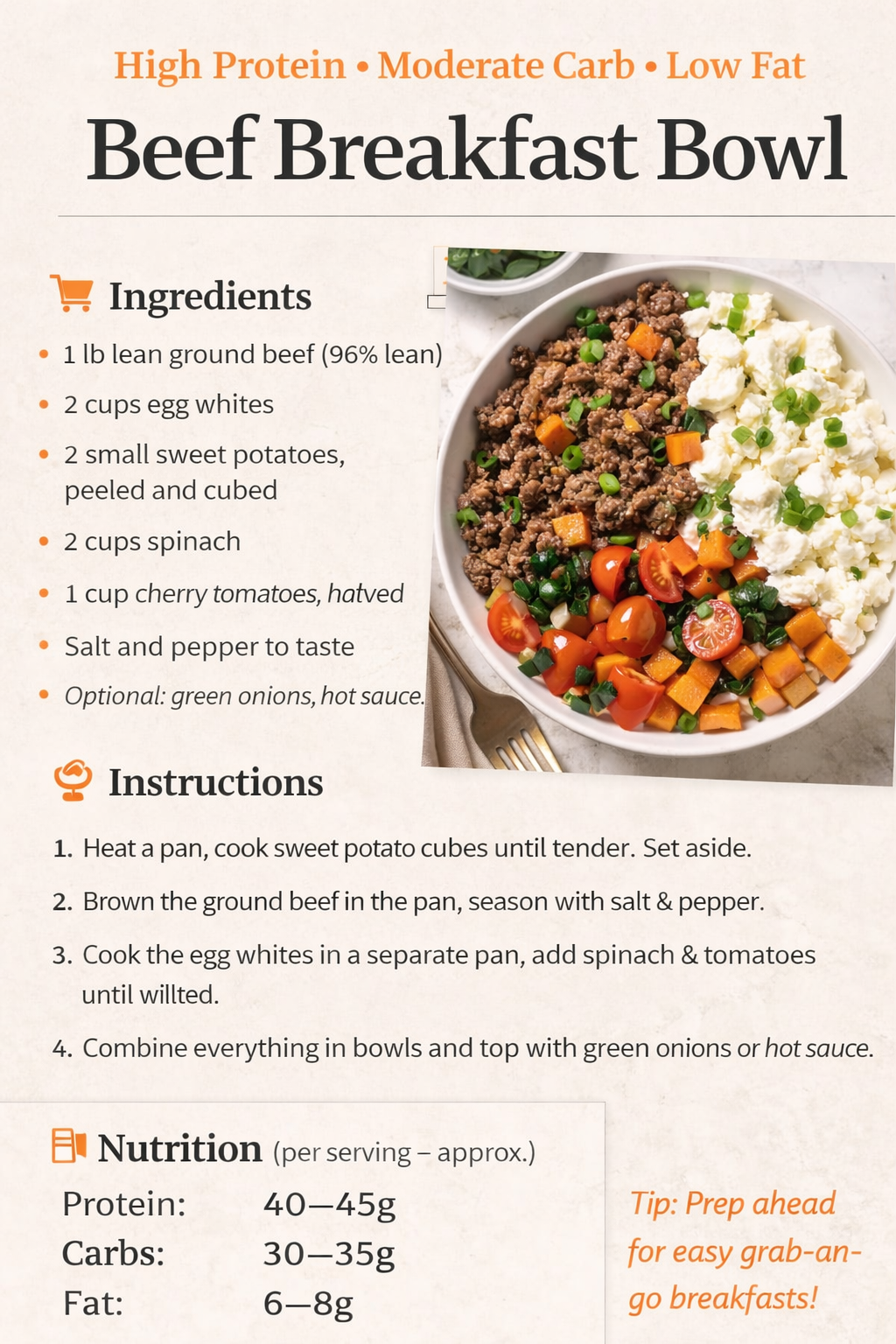
Recipe of the Week: High Protein Beef Breakfast Bowl High Protein
Moderate Carb • Low Fat | Serves 4–5
Nutrition
Protein: 35–45g
Carbs: 25–35g
Fat: 8–10g
Instructions
1 Cook ground beef until browned.
2 Add onions and peppers, cook until soft.
3 Add spinach until wilted.
4 Add egg whites and scramble.
5 Serve over rice.
Ingredients
1 1.5 lbs lean ground beef (93/7 or leaner)
2 4 cups egg whites
3 2 cups cooked rice
4 1 cup diced bell peppers
5 1/2 cup diced onion
6 2 cups spinach
7 Garlic powder, salt & pepper

On April 25, we honor the life of Nic Crews, who was tragically shot at the VA in Pickens County, GA. Nic was a veteran, a valued member of the SparkFit community (formerly CrossFit Marietta), and a close friend to many — especially Cody Porter. He was also a devoted father of two, with one more on the way, a role he carried with pride and purpose.
Nic was known for his dedication, his character, and the relationships he built through fitness, service, and family. His life was taken far too soon, and we take this time to remember the impact he had on everyone around him.
This workout is dedicated to Nic — a test of grit, resilience, and perseverance. As we move through each run, lift, and rep, we do so with purpose. Let it be a reminder of the strength it takes to serve others and the responsibility we carry to honor those who have given so much.
We remember Nic Crews.