Bound Newsletter 5.24.2026
Memorial Day Murph: Meaning, Mindset, Preparation, and Workout Options
Every Memorial Day, CrossFit communities around the world gather to complete one of the most meaningful workouts in fitness:
Murph
What makes Murph special is not simply the volume, intensity, or challenge.
Murph represents remembrance.
It is a workout performed in honor of Navy Lieutenant Michael Murphy, who was killed in Afghanistan during Operation Red Wings in 2005 and posthumously awarded the Medal of Honor for his heroic actions. The workout was originally known as “Body Armor,” one of Murphy’s favorite training sessions before becoming a global Memorial Day tradition within the CrossFit community.
Every year athletes voluntarily choose discomfort, fatigue, and challenge as a way to honor sacrifice, courage, and service.
Murph is more than a workout.
It is a reminder that fitness can represent something bigger than ourselves.
What Is Murph?
“Murph”
For Time:
1 Mile Run
100 Pull-Ups
200 Push-Ups
300 Air Squats
1 Mile Run
If you’ve got a 20-lb vest or body armor, wear it.
The Meaning Behind Murph
Murph has become one of CrossFit’s most powerful traditions because it brings people together through shared effort and shared purpose.
Every Memorial Day:
First-time athletes complete their first Hero workout
Veterans remember fallen teammates and friends
Families train together
Communities support one another through hardship
Athletes of all levels participate side-by-side
The workout is difficult by design.
The fatigue matters.
The discomfort matters.
The mental challenge matters.
Because for one brief moment, we voluntarily choose hardship while reflecting on those who endured incomprehensibly greater sacrifice.
Preparing Mentally for Murph
One of the biggest mistakes athletes make is approaching Murph like a normal workout.
Murph is not a sprint.
Murph is not a max-effort competition for most people.
Murph is not about ego.
Murph is about:
Patience
Discipline
Perspective
Community
Resilience
1. Respect the Volume
Murph contains:
100 pull-ups
200 push-ups
300 squats
2 miles of running
Even advanced athletes can struggle if they underestimate the workload.
Go in with humility.
2. Focus on Steady Progress
Murph rewards athletes who stay composed.
Instead of thinking about the entire workout:
Focus on the next set
Focus on your breathing
Focus on efficient movement
Stay mentally present
The athletes who panic early usually suffer late.
3. Stay Connected to the Purpose
When the workout gets uncomfortable, remember why we do it.
Murph is not about proving toughness.
It is about honoring sacrifice.
That perspective changes everything.
How To Approach Murph Physically
Hydrate Beforehand
Hydration starts days before Murph.
Especially in warmer climates, prioritize:
Water
Electrolytes
Sodium
Potassium-rich foods
Fuel Properly
Murph is a long-duration workout.
Do not underfuel.
The day before, prioritize quality carbohydrates:
Rice
Potatoes
Fruit
Oatmeal
Sourdough bread
Don’t Destroy Yourself the Week Before
You do not need to PR every workout leading into Murph.
Focus on:
Recovery
Mobility
Sleep
Moderate training intensity
Show up fresh.
Competitor Track
Murph Unpartitioned (with weight vest)
For Time:
1 Mile Run
100 Pull-Ups
200 Push-Ups
300 Air Squats
1 Mile Run
Weight Vest Required
This version is designed for experienced athletes with:
Strong muscular endurance
Advanced pacing ability
High-volume gymnastics experience
Proper preparation
Unpartitioned Murph becomes extremely mentally demanding because athletes complete all pull-ups before moving to push-ups, and all push-ups before squats.
This requires:
Excellent grip stamina
Shoulder endurance
Push-up capacity
Advanced pacing discipline
RX Track Options
(With or Without Weight Vest)
The goal of partitioning Murph is to maintain movement quality, reduce muscular failure, and sustain pacing.
Option 1:
50 Rounds
2 Pull-Ups
4 Push-Ups
6 Air Squats
Best For:
Athletes who struggle with muscular fatigue
Athletes wanting steady pacing
Beginners to RX volume
This option keeps fatigue very manageable.
Option 2:
20 Rounds
5 Pull-Ups
10 Push-Ups
15 Air Squats
This is the classic “Cindy-style” partition.
Best For:
Most athletes
Sustainable pacing
Balanced fatigue management
This is the most commonly recommended approach.
Option 3:
10 Rounds
10 Pull-Ups
20 Push-Ups
30 Air Squats
Best For:
Intermediate to advanced athletes
Athletes with strong push-up stamina
Requires more muscular endurance and larger unbroken sets.
Option 4:
5 Rounds
20 Pull-Ups
40 Push-Ups
60 Air Squats
Best For:
Advanced athletes
Athletes experienced with Murph pacing
This option becomes very demanding on the shoulders and chest.
Option 5:
2 Rounds
50 Pull-Ups
100 Push-Ups
150 Air Squats
Best For:
Highly advanced athletes only
This variation becomes extremely mentally and physically challenging due to large-volume sets.
Beginner Track
(Goal: 30 Minutes or Less)
Murph should be accessible to everyone.
Scaling is not weakness.
Scaling is maturity.
The purpose of Murph remains the same regardless of modifications.
Beginner Option A
400m–800m Run
10 Rounds:
5 Pull-Ups
10 Push-Ups
15 Air Squats
400m–800m Run
Best For:
Newer CrossFit athletes
Athletes building endurance
First-time Murph participants
Beginner Option B
400m–800m Run
5 Rounds:
10 Pull-Ups
20 Push-Ups
30 Air Squats
400m–800m Run
Best For:
Athletes comfortable with larger sets
Moderate fitness levels
Movement Substitutions
Pull-Up Substitutions
Choose the option that allows consistent quality movement.
Options:
Ring Rows
Banded Pull-Ups
Feet-Elevated Ring Rows
Low Bar Rows
Strict Pull-Ups
The goal is full range of motion and sustainable movement.
Push-Up Substitutions
Options:
Elevated Push-Ups on Bench
Elevated Push-Ups on Box
Parallette Push-Ups
Knee Push-Ups
Assisted Banded Push-Ups
Focus on:
Tight core
Full range of motion
Consistent movement quality
Squat Modifications
Heels Elevated
Use plates or wedges under the heels if needed to improve:
Depth
Positioning
Mobility
Comfort
The goal is achieving:
Full squat depth
Proper mechanics
Consistent movement
Final Thoughts
Murph is one of the most powerful traditions in fitness because it connects physical challenge to meaning.
Every year we’re reminded:
Community matters
Sacrifice matters
Perspective matters
Gratitude matters
Whether you complete Murph:
RX
Scaled
With a vest
Without a vest
Alone
With a team
Fast
Slow
What matters most is showing up with intention.
Honor the meaning behind the workout.
Support the people around you.
Move with gratitude.
Remember why we do it.
Memorial Day Murph at CrossFit Bound
Join us this Memorial Day as we honor Lt. Michael Murphy and all fallen service members through sweat, effort, and community.
We train together.
We remember together.
Bragging Board
Thomas Butler PRs:
-Jeb Buffington 2:53
-Dylan Porter 2:59
-Meghan Willis 4:35
-Matt Schuster 4:45
-Natalie Gordon 5:19 (1:42 faster)
-Mary Turner 4:34 (:31 sec faster)
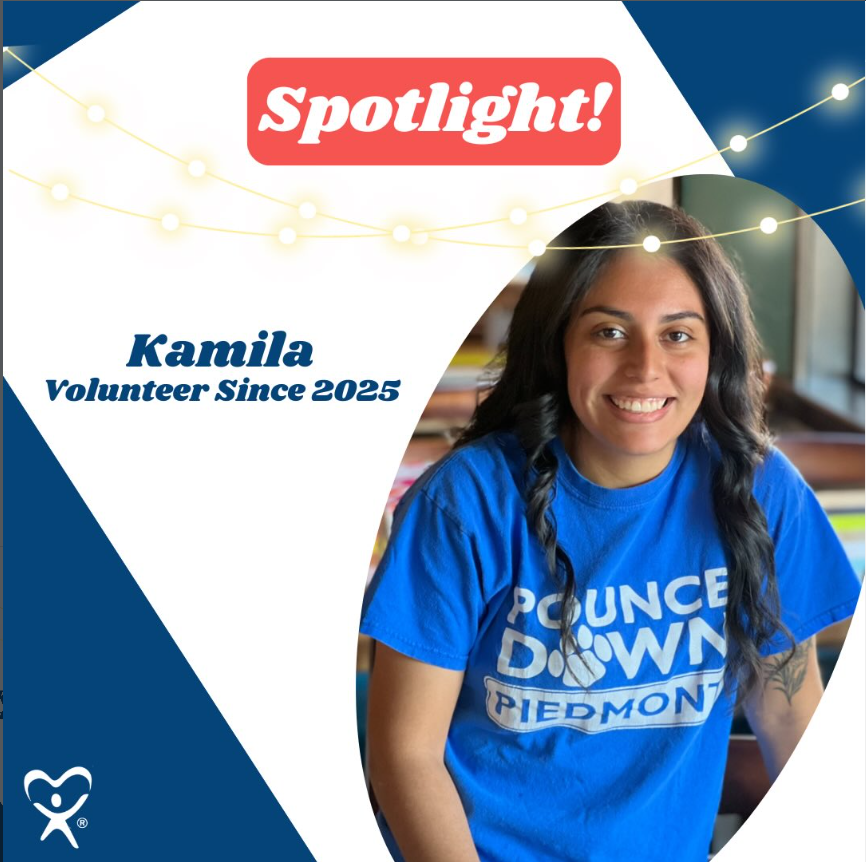
Congratulations Kamila
We’re proud to recognize Kamila for her incredible service as a CASA volunteer and the impact she’s already making in our community. In six months, she has dedicated over 31 hours to advocacy, traveled more than 280 miles to support children and families, and helped achieve permanency on her very first case. Kamila continues to serve with compassion, professionalism, and a genuine commitment to ensuring every child’s voice is heard. Her dedication to learning, communication, and caring for others is truly inspiring, and we’re honored to highlight her service in this week’s newsletter.
Welcome our New Member
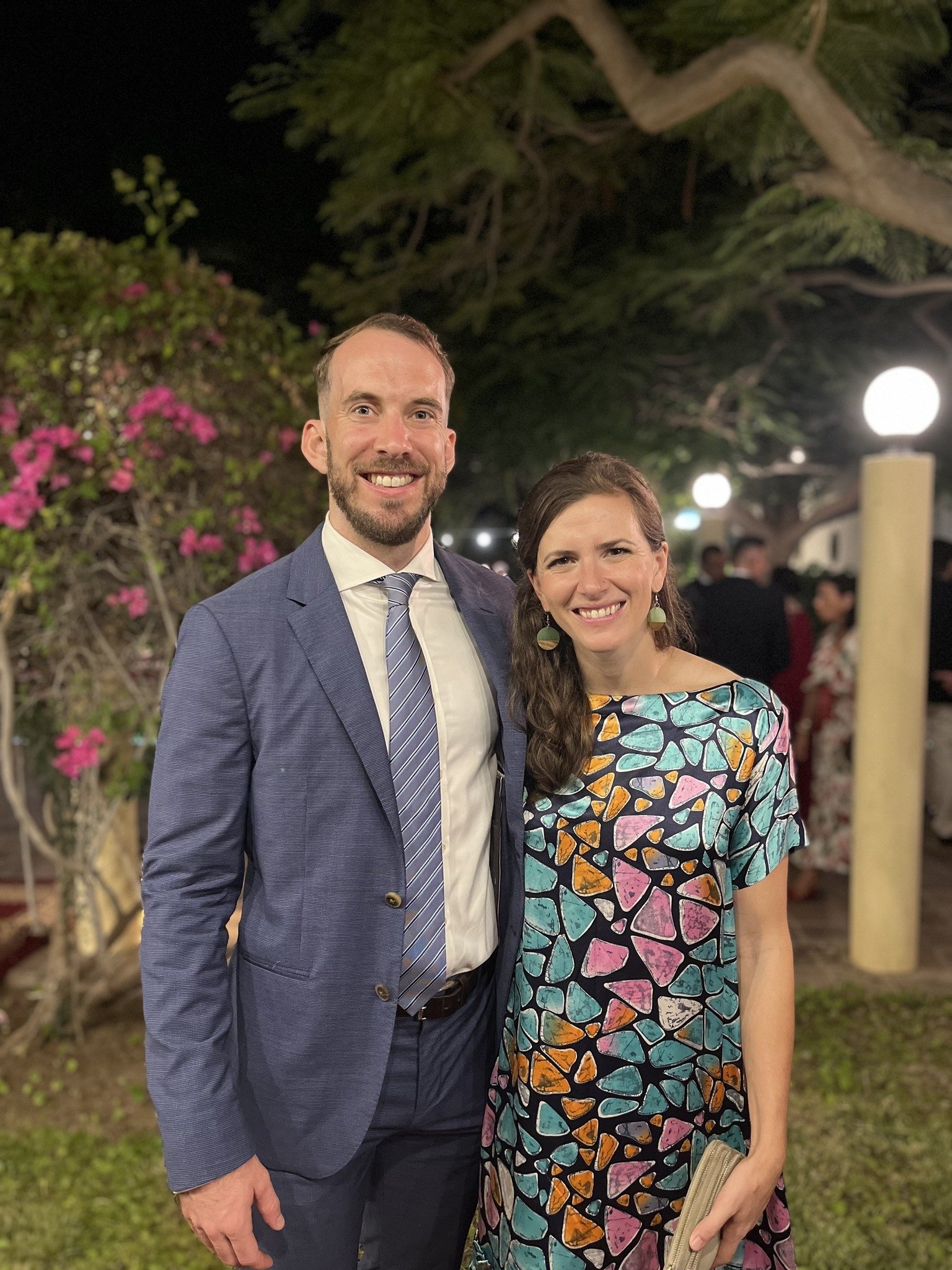
Meet two new coaches - Andrew & Christy Mitchell
We are excited to have Andrew and Christy join our team at CrossFit Bound. Andrew will be coaching the early morning classes on Monday and Fridays mainly and Christy will be helping with our kids summer program and continuing that in the fall. Below you will find their bios
Christy Bio
I started Crossfit in 2014 after signing up for a Tough Mudder as a way to make friends in a new city. In fact, my husband, Andrew, asked me on our first date after a Saturday morning workout! I struggled with fitness throughout college without the routine of high school sports. At first I was intimidated by aspects of weightlifting, but with the encouragement of my coach, I overcame my fears and fell in love with Crossfit. It has truly helped me become the best version of myself. I’m in the best shape of my life AFTER having three kids, and it is all because doing Crossfit consistently works!
Our family lived overseas in North Africa for 8 years. After 4 years of humanitarian aid, we decided to make a change and serve the community in a new way— opening the first CrossFit gym in our country! I started coaching when our 2nd child was 4 months old, often carrying her in the Ergo during the early days of the gym! Fitness has always been a family affair. I'm motivated every day to teach my kiddos to prioritize wellness in all areas of life. I was honored to come alongside women at our gym to help them experience real, lasting life change. After 4 years of successful gym ownership, we handed the business off and began a new adventure in America. Since our transition stateside, I’ve been leading CrossFit kids classes and am motivated to encourage fitness and health in our next generation!
Andrews Bio
I grew up playing club soccer in Dallas, Tx, so I didn’t spend much time in the weight room until college. Things changed in 2012 when I tried CrossFit for the first time. That first WOD—100 thrusters with a 20-minute time cap—got my competitive juices flowing and I was hooked. After winning over my future wife, who was clearly impressed by my fitness, we moved to Mauritania and opened our country’s first CrossFit gym. It was there that I experienced a community transformed by CrossFit. Imagine a group of people, who had never even heard of CrossFit, falling in love with the same program we love. You come in with goals, looking for physical results, which yeah, who doesn’t want to look good in front of a mirror. But then you discover so much more; a genuine community that encourages one other to pursue health and push past limits together. That’s what I love most about CrossFit—its ability to create friends for life and truly change lives. CrossFit has become more than just fitness for our family; it’s a lifestyle. My wife and I are raising our three kids around the gym community, and I want them to grow up seeing fitness, hard work, and supportive relationships as a normal part of everyday life. That’s ultimately why I coach: to help others experience the same kind of community and life change that CrossFit has given us.
Weekly Training Highlight Reel is in the Works
Upcoming Birthdays & Anniversaries
Anniversaries
6+Years
Tyler Cory
Michelle McCrary
Michael Guelfo
Ken Wysocki
Miguel Chavez
Michael Jamorski
Meghan Willis (9)
Eriko Moore
Dylan Dejesus
Brittany Karneol (12)
Missy Ureda
Nathan & Mary Cox (8)
Julie Chambers (8)
Katherine Garey (12)
Mary Lubbers (12)
Kara Everill
Miles Pettit (9)
Amber Buettner (alot)
3-Years
Sarah PB
Sergio Rivera
Sidney HIghtower
Emily Conaster
2 Years
Ryan Stratche
Chuck Carter
Katie & Ryan Allen
Brandon Brooks
1 Year
Lee and Elizabeth Tillman
Grayson Young
Birthdays
Elber Albaladejo May 27
Justin Rutland May 29
Bound Hybrid is CrossFit Bound’s new hybrid training program designed to blend strength, endurance, and functional fitness into one challenging and rewarding class experience.
Each session combines:
Running
Rowing & Ski Erg
Functional strength work
Carries, sleds, and bodyweight movements
Aerobic conditioning
Interval training
Performance-focused workouts
This class is built for athletes of all levels looking to:
Improve endurance
Increase work capacity
Build mental toughness
Develop sustainable fitness
Prepare for HYROX-style events or endurance challenges
Become a more well-rounded athlete
No competition experience required. Just bring effort and consistency.
This class will be included into your membership (ie: this will count towards 3 day week memberships)
Starting Sunday, June 7 at 9:00 AM with Coach Sergio Rivera.
From the CFB Member Vault - How to Use the Training Education Systems
Inside the CrossFit Bound Member Vault
The Training Education Systems section of the Member Vault is designed to help you understand why we train the way we do — not just what to do each day. This section gives you the tools, knowledge, and structure to train with more confidence, consistency, and purpose.
Whether you're brand new to CrossFit or years into your fitness journey, this section helps you become more intentional with your training and better understand how fitness supports your life outside the gym.
📚 What You’ll Find Inside
🏋️ Strength Training Education
Learn the fundamentals behind our strength cycles and progression systems.
Inside this section you’ll find:
Percentage and loading guides
Progressive overload principles
Strength cycle explanations
Tempo, volume, and intensity breakdowns
Movement standards and technique tips
How to Use It:
Use these resources before or after training sessions to better understand:
why we program certain lifts
how to scale appropriately
how to track progress over time
when to push intensity vs focus on quality
This helps you train smarter instead of just harder.
🫀 Conditioning & Aerobic Training
Understand how to build endurance, recover better, and improve overall fitness capacity.
Topics include:
Aerobic vs anaerobic training
Pacing strategies
Running, rowing, bike, and Ski Erg education
Heart rate zones
Interval training methods
VO₂ max development
How to Use It:
Use this section to:
improve your pacing during workouts
understand effort levels
recover more efficiently
build long-term conditioning without burnout
This is especially helpful if you often “redline” workouts or struggle with pacing consistency.
🤸 Gymnastics & Skill Development
Learn how to approach skill work with patience and structure.
Includes:
Pull-up progressions
Handstand development
Muscle-up progressions
Core strength education
Mobility and positional work
How to Use It:
Use the skill progressions alongside class training or open gym work. Focus on:
consistency over intensity
quality movement patterns
small progressions repeated often
Remember: skills are developed through practice and repetition, not rushing the process.
🧠 Training Philosophy & Education
This section explains the why behind CrossFit methodology and the systems we use at CrossFit Bound.
Topics may include:
General Physical Preparedness (GPP)
Functional movement
Intensity vs consistency
Recovery and adaptation
Longevity in training
Why we lift heavy, breathe hard, and learn new skills
How to Use It:
Spend time reading through these articles weekly to develop a better understanding of:
how fitness improves daily life
why our programming is structured the way it is
how to train for long-term health and performance
The more you understand the process, the more successful and confident you’ll become.
📈 How to Get the Most Out of the Member Vault
✅ Start Small
You do not need to read everything at once. Start with:
the current strength cycle
pacing education
one skill progression
Then build from there.
✅ Apply What You Learn
The goal isn’t just education — it’s implementation.
Use the tools to:
track workouts
improve recovery
refine movement
make better decisions during training
✅ Revisit Resources Often
As your fitness grows, your understanding will too.
An article or concept that feels basic today may completely change your perspective six months from now.
🔥 The Goal of the Training Education Systems
We want every member to:
train with purpose
understand the process
build confidence
develop lifelong fitness habits
become more capable inside and outside the gym
The Member Vault is more than information — it’s a roadmap to help you become stronger, healthier, and more resilient over time.
Use it consistently. Learn continuously. Apply what matters.
*If you are member and need access email info@crossfitbound.com to get the password*
Upcoming Events & Summer Kids Class
Memorial Day Schedule
8am and 930am only - if you plan on bringing a friend of family please have them fill out the Free Class or Waiver and notify me.
☀️ CrossFit Bound Kids Summer Classes – Starting June 2–3! ☀️
Keep your kids active, confident, and having fun all summer long with our CrossFit Bound Kids program! These classes are designed to build coordination, strength, and confidence through age-appropriate fitness, games, and movement.
Mini Movers (Ages 3–5)
A fun and energetic introduction to movement! Kids will learn basic motor skills, balance, coordination, and body awareness through games and structured play.
🗓 Wednesdays: 10:15–11:00 AM
💲 $85/month or $150 for the full summerJunior Jumpers (Ages 6–12)
Perfect for developing strength, fitness, and confidence! These classes introduce foundational CrossFit movements, teamwork, and discipline in a fun, supportive environment.
🗓 Tuesdays & Wednesdays: 9:00–10:00 AM
💲 $120/month or $200 for the full summerSpots are limited—secure your child’s place by using the QR links below and give them a summer full of movement, growth, and fun!

Age group 6-12 yrs old - Junior Jumpers - will meet Tuesday & Wednesdays from 9-10am.
Cost is $120 monthly or $200 paid in full (+$50 for sibling)

Age group 3-5 yrs old - Mini Movers - will meet on Wednesdays from 10:15-11am
Cost is $85 monthly or $150 paid in full (+$50 for sibling)
Education: CrossFit Journal Article ““But What Actually Makes CrossFit Different?””
By Stephane Rochet, CF-L3
You can know what CrossFit is and still not understand why it works. The aims, the prescription, the method, the implementation, and the results are each distinct, and each one matters. Remove any of them, and you have something that looks like CrossFit but isn’t.
“Understanding CrossFit” broke this down with characteristic precision. We’ve turned it into a conversation that goes after the real objections. Not the surface-level ones, but the deeper skepticism that keeps people from fully committing. If you’ve been doing CrossFit for a while and want to be able to explain it more clearly, to yourself or someone else, this is worth reading carefully.
“Every gym I’ve ever joined has told me their program is different. Why should I believe CrossFit actually is?”
Because most programs can’t tell you specifically what they’re training you for. They have exercises, they have equipment, and they have a schedule, but ask them what the goal is, and you’ll get something vague. “Get fit.” “Feel better.” “Tone up.” CrossFit has a precise answer: We’re training you to be ready for anything. Not a specific race, not a specific lift, not a specific test. Anything. The unknown and the unknowable. That’s a different target than what most programs are aiming at, and it requires a different approach to hit it.
“‘Ready for anything’ sounds like a marketing line.”
Maybe, but think about what it actually means in practice. It means we’re not optimizing you for one scenario at the expense of others. A marathon program makes you better at marathons and worse at things that require strength and power. A bodybuilding program makes certain muscles bigger, but it doesn’t do much for your cardiovascular system or your coordination. Every specialized program has a trade-off built into it. CrossFit’s trade-off is that you won’t be the absolute best at any single thing, but you’ll be genuinely capable across everything. For most people’s actual lives, that’s the more useful bargain.
“What does the actual training look like? What are you doing in a CrossFit workout?”
Three things, always working together: functional movements, high intensity, and constant variation. Functional movements are the natural patterns of the human body — squatting, hinging, pressing, pulling, carrying. Not machines, not isolation exercises. The reason they matter isn’t philosophical; it’s mechanical. They move large loads over long distances quickly. That combination is the definition of power. And power is what actually makes you athletic.
“What about intensity? Isn’t that just a way of saying ‘work really hard?’”
It’s more specific than that. Intensity is the variable most directly linked to adaptation. You can tire yourself out with low-intensity work all day by taking long walks, easy bike rides, and casual swims, and produce minimal change in your body. Intensity signals to your body that it needs to adapt. That said, intensity is relative. What’s intense for a first-week athlete is different from what’s intense for someone who’s been training for five years. The goal is intensity relative to your capacity, not someone else’s.
“And the constant variation where every day is different. Doesn’t that make it hard to get good at anything?”
It forces your body to keep adapting, which means you keep getting fitter. Do the same workout repeatedly, and your body adapts to it and then stops. You’ve probably felt this: the workout that used to destroy you now feels manageable. Variation closes that loop. And it’s not random like some like to contend; it’s engineered to hit different movements, time domains, and energy systems in a way that keeps the stimulus broad and the ceiling high.
“Is CrossFit actually based on evidence, or is that just something people say?”
Everything gets measured. Times, loads, reps, and scores all go on the board. That’s not just for motivation, though it does motivate people. It’s data. It tells you whether you’re actually improving, and it tells coaches whether the programming is working. CrossFit was built on the principle that meaningful claims about safety, effectiveness, and efficiency can only be supported by measurable, observable, repeatable results. Not tradition. Not intuition. Not because something feels hard. Data. That standard was in place long before “evidence-based” became a buzzword in the fitness industry.
“The whiteboard thing. It sounds a little intense socially. What if I don’t want everyone seeing my score?”
Most people feel that way before they try it. What actually happens is the opposite of what you’d expect. The whiteboard creates accountability to yourself, not to anyone else’s judgment. Nobody’s looking at your score thinking less of you. They’re looking at it, thinking about their own. And there’s something that happens when a result is public and permanent that genuinely changes how hard people try. Not because of shame — because of pride. You want to put something on that board that you can stand behind. That competitive element, even when it’s just you competing against your last time, produces an intensity that no amount of internal motivation quite matches.
“What’s the actual result of all this? If I do CrossFit consistently, what changes?”
Work capacity. That’s the honest answer, and it’s more significant than it sounds. Work capacity means you can do more, in more situations, for longer, across different types of demands, not just one. And here’s what’s interesting: the things most people say they’re training for, such as strength, endurance, body composition, and cardiovascular fitness, tend to follow. They’re not separate goals you have to chase independently. They’re byproducts of building genuine work capacity. Chase those things directly, and you might get them in isolation. Build real, broad fitness, and you get all of them together.

Recipe of the Week: Garlic Herb Pork Tenderloin with roasted sweet potatoes & garlic green beans
Macros (Per serving)
Calories: 430
Protein: 40g
Carbs: 28g
Fat: 16g
Instructions
1. Roast the Sweet Potatoes
Preheat oven to 425°F.
Toss sweet potatoes with olive oil, salt, pepper, and paprika. Spread evenly on a baking sheet. Roast for 20–25 minutes, flipping halfway through.
2. Season the Pork
Mix olive oil, garlic, rosemary, thyme, salt, and pepper. Rub all over pork tenderloin.
3. Sear the Pork
Heat an oven-safe skillet over medium-high heat. Sear pork on all sides for 2–3 minutes per side until browned.
4. Finish in Oven
Transfer skillet to oven and roast for 12–15 minutes or until internal temperature reaches 145°F. Let rest for 5 minutes before slicing.
5. Cook the Green Beans
Heat olive oil in a skillet over medium heat. Add garlic and sauté 30 seconds. Add green beans, salt, and pepper. Cook for 6–8 minutes until tender-crisp. Stir in lemon juice if desired.
6. Serve
Plate sliced pork with roasted sweet potatoes and garlic green beans.
Nutrition Highlights
Lean Protein
Complex Carbohydrates
High Fiber & Micronutrients
Family-Friendly Balanced Meal
Optional Variations
Swap sweet potatoes for baby potatoes or rice
Add red pepper flakes for heat
Use asparagus or broccoli instead of green beans
Ingredients
Pork
1½ lbs pork tenderloin
2 tbsp olive oil
4 cloves garlic, minced
1 tsp dried rosemary
1 tsp dried thyme
½ tsp salt
¼ tsp black pepper
Sweet Potatoes
2 large sweet potatoes, peeled & cubed
1 tbsp olive oil
½ tsp salt
¼ tsp black pepper
½ tsp paprika
Green Beans
1 lb fresh green beans, trimmed
1 tbsp olive oil
2 cloves garlic, minced
¼ tsp salt
¼ tsp black pepper
1 tsp lemon juice (optional)

This weeks meals from WodFuel
Weekly Training Breakdown