Bound Newsletter 7.27.2026

2026 CrossFit Games Champions
Aimee Cringle & James Sprague
2026 CrossFit Games: Twenty Years in the Making
By Brandon Phillips, Owner | CrossFit Bound
Twenty years.
Two decades of refining a sport, pushing the limits of human performance, and answering one simple question:
Who is the Fittest on Earth?
The 2026 CrossFit Games felt like the culmination of that journey.
This wasn't just another championship weekend. It was a celebration of 20 years of CrossFit competition with 20 events that challenged every imaginable aspect of fitness. From raw strength and speed to endurance, gymnastics, skill, grit, strategy, and recovery, the Games demanded complete athletes—not specialists.
And if Day 1 taught us anything, it's that this may have been one of the hardest opening days in CrossFit Games history.
Athletes were tested from the very first event. There was no easing into the weekend. Every workout mattered. Every point mattered. Every decision mattered.
It was exactly what the CrossFit Games should be.
Fitness Isn't Built Overnight
Watching the Games can be inspiring, but it can also be intimidating.
You see athletes performing movements most people have never attempted. You see incredible strength, unbelievable endurance, and near-perfect execution under fatigue.
But what we often don't see is the thousands of ordinary days that made those extraordinary performances possible.
That idea was perfectly captured by Arielle Loewen after Event 19 when she was asked how athletes at her level continue developing new skills.
Her answer wasn't about elite programming or secret training methods.
She said:
"Step one: know where you are. Celebrate where you are, celebrate the wins, and don't compare because that will steal your joy."
What an incredible reminder.
Comparison has become one of the biggest obstacles to progress—not just in fitness, but in life.
At CrossFit Bound, we say it all the time:
Your only competition is the person you were yesterday.
The newest member learning how to squat deserves to celebrate just as much as the athlete getting their first muscle-up. The first push-up. The first box jump. The first pull-up. The first RX workout.
Every victory matters.
Progress is still progress.
The Secret Isn't Perfect Training
Another quote that stuck with me came from 2024 CrossFit Games Champion James Sprague.
He said:
"Take no day for granted. Every day to be able to train is a gift. Healthy or not, get in the gym and make it happen. Athletes get caught up with stacking great days, and that's not realistic. What's realistic is just showing up, giving your best every day, and never quitting on yourself."
That's one of the most powerful lessons any athlete can learn.
Too many people believe success comes from having perfect weeks.
Perfect nutrition.
Perfect sleep.
Perfect workouts.
Perfect motivation.
But that's not reality.
Life happens.
You get busy.
You get tired.
Work gets stressful.
Kids get sick.
Travel interrupts routines.
The athletes who succeed aren't the ones who never face obstacles.
They're the ones who continue showing up anyway.
Sometimes your best looks like setting a personal record.
Sometimes your best looks like scaling the workout and simply moving for an hour.
Both count.
What the Games Teach Everyday Athletes
The CrossFit Games are entertaining because they're spectacular.
But they're meaningful because the lessons apply to everyone.
You don't have to qualify for the Games to train like an athlete.
You don't need to lift the heaviest weights.
You don't need to win workouts.
You simply need to commit to the process.
Show up.
Trust your coaches.
Celebrate small wins.
Scale when needed.
Push when you can.
Recover when necessary.
Repeat.
Those habits—not a single workout—are what build long-term fitness.
Train Hard. Live Capable.
Watching twenty years of CrossFit culminate in one incredible weekend reminds us why functional fitness matters.
The Games showcase the highest level of our sport.
Our gym exists to help everyday people become stronger parents, healthier spouses, more capable workers, confident grandparents, better first responders, and athletes for life.
The movements may look different.
The weights may be different.
The goals may be different.
But the mindset is exactly the same.
Show up.
Do the work.
Celebrate progress.
Never quit on yourself.
Congratulations to every athlete who stepped onto the competition floor this weekend. Thank you for reminding all of us what consistency, resilience, and perseverance truly look like.
Here's to the next twenty years of CrossFit—and to every person who walks through the doors of a CrossFit gym looking to become a little stronger than they were yesterday.
Train Hard. Live Capable.
Welcome New Members
Albert Morales & John Mosquera
Bragging Board
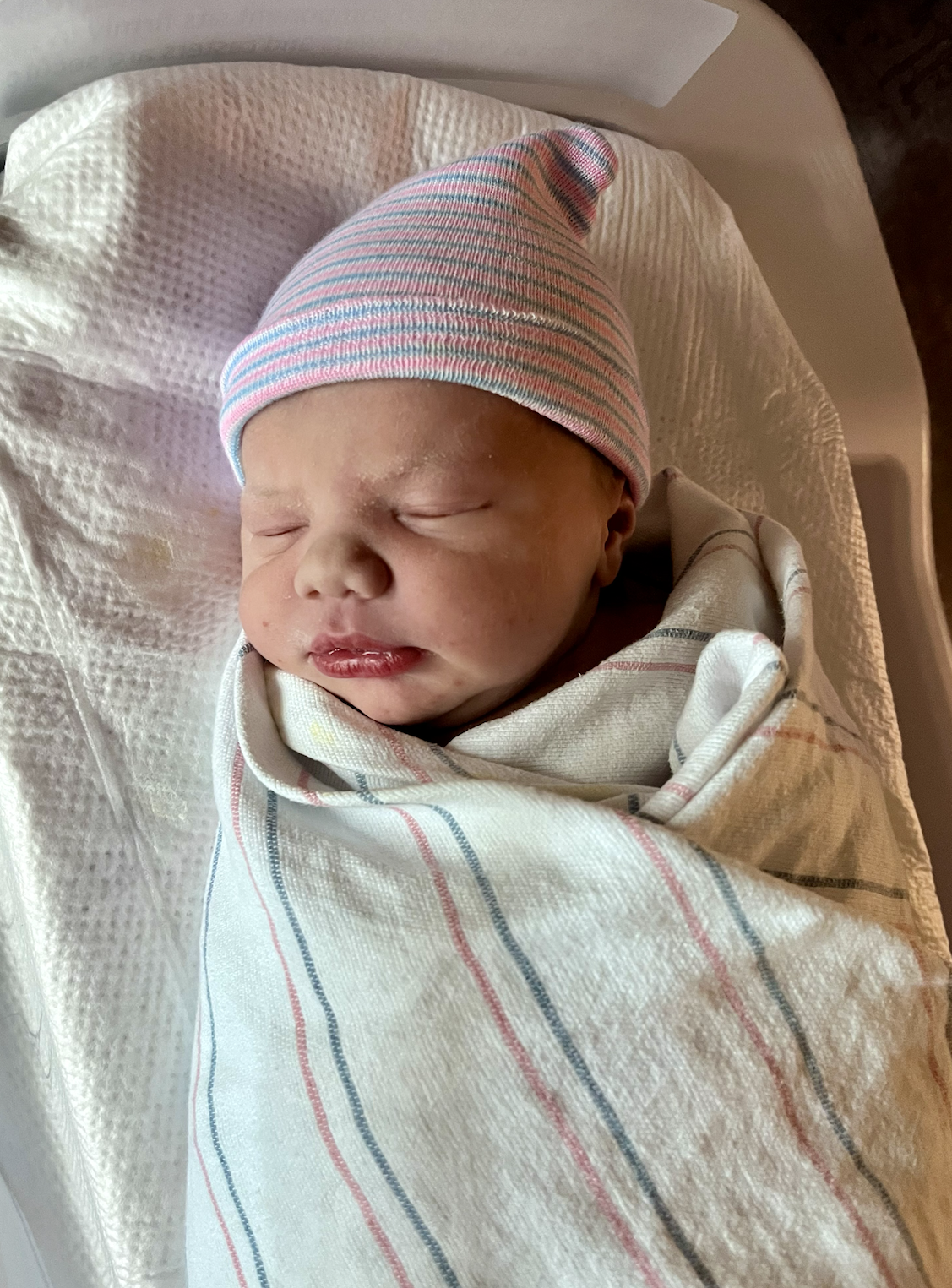
Welcome Madeline Drew Mitchell
Christy and Madeline are both healthy and happy. (Andrews doing great too:)
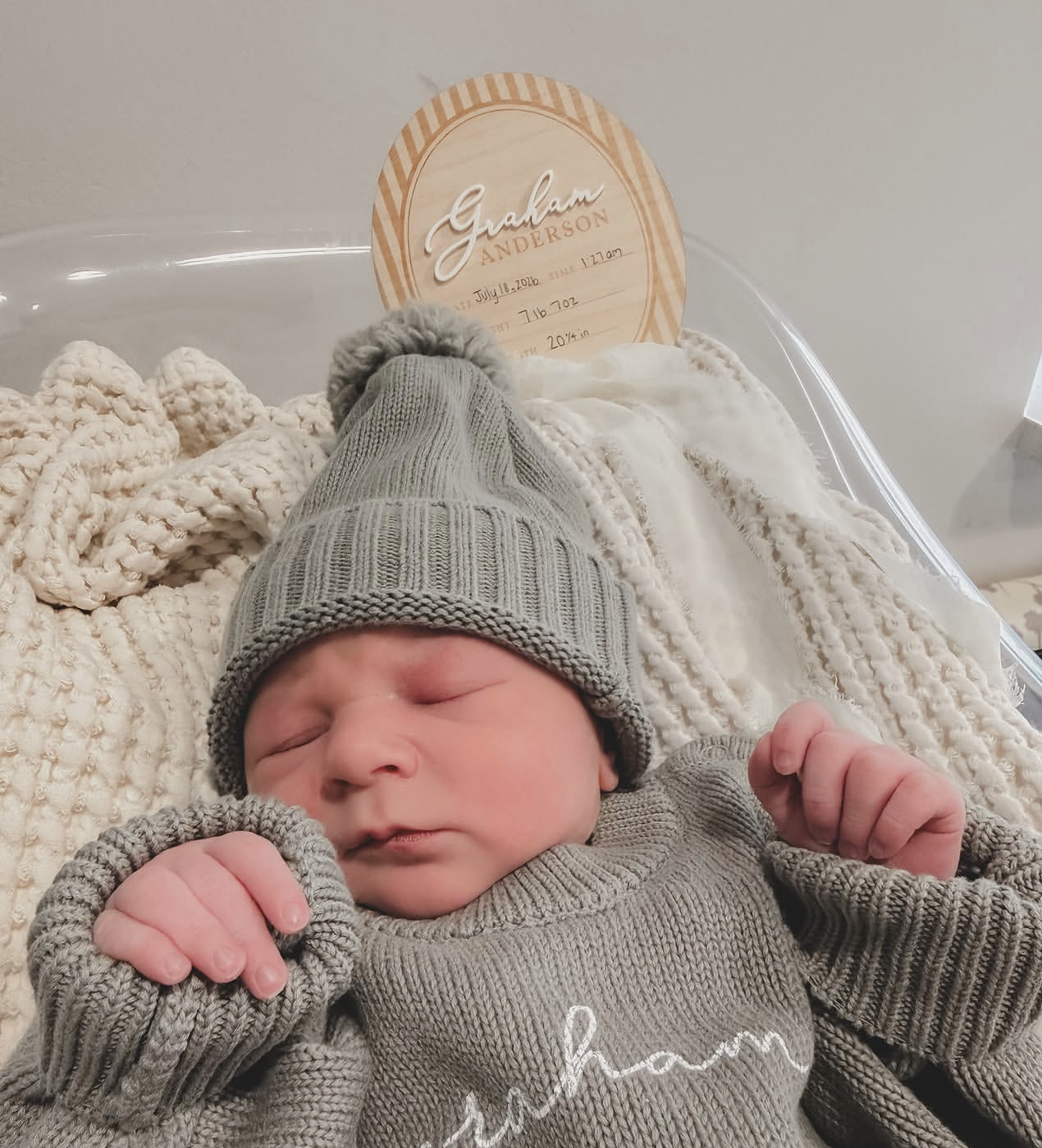
Welcome Graham Karneol
Brittany and Graham are doing great and now I’m waiting on Brittany to get back on the Committed Club board :)
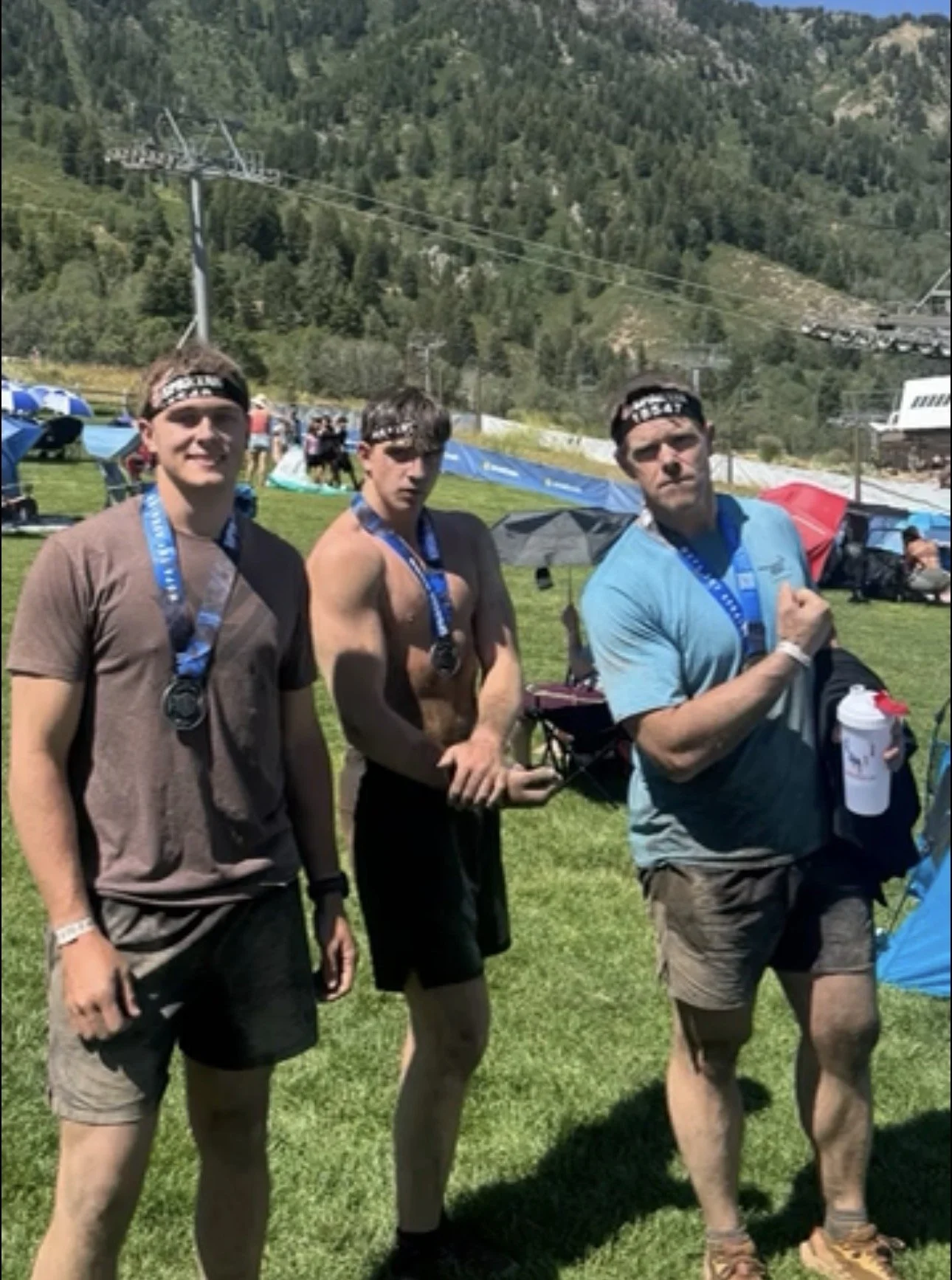
Jeb and his boys flexing on the mountain after dominating the Spartan Race.
Believe I saw Jeb get first in his age group 60-66 years old (thats not his real age:)
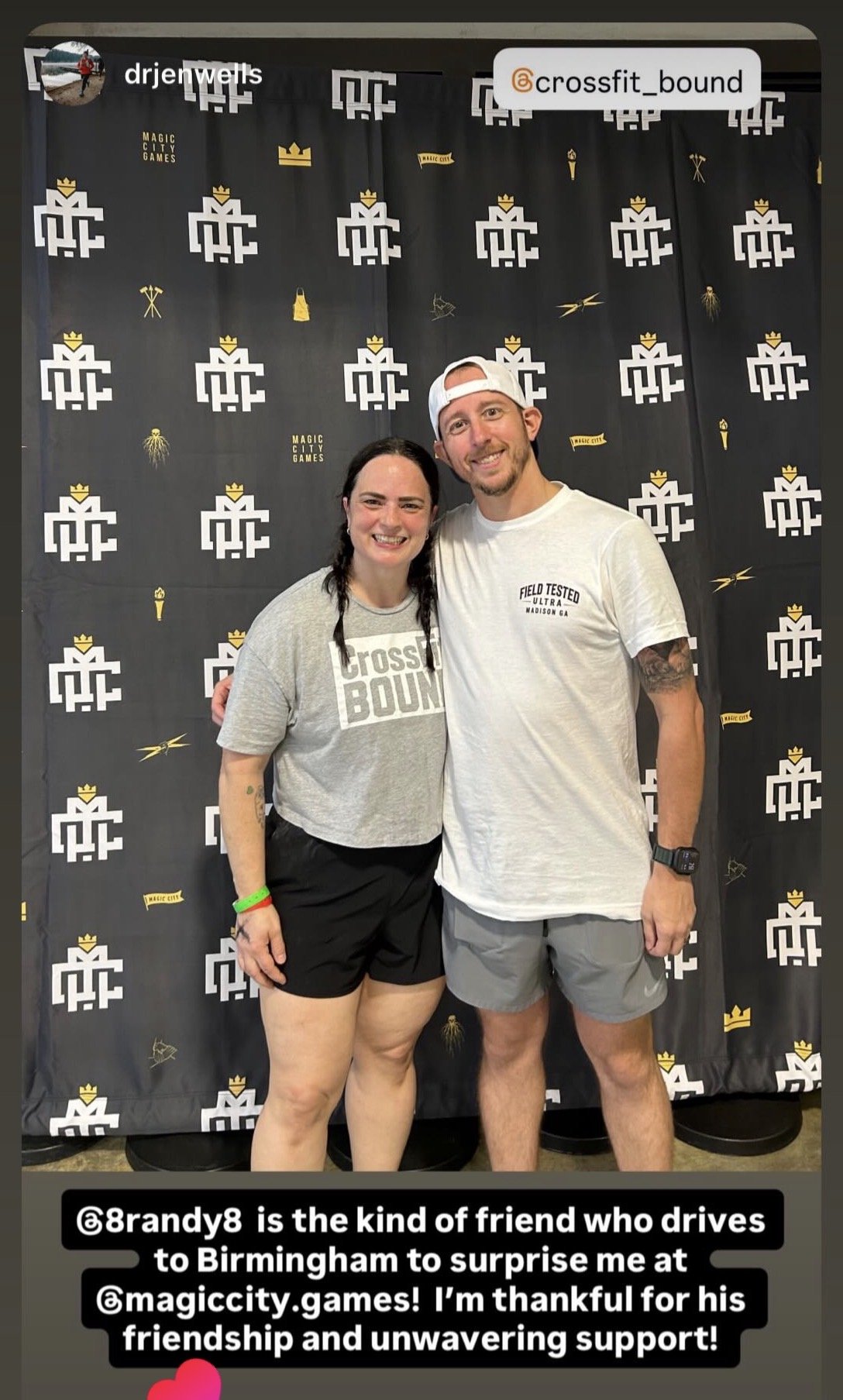
Jen Wells competed at the Magic City Games
and Randy Joering went down to support and coach!
Upcoming Birthdays & Anniversaries
Anniversaries
1- Yr
Jeff Mcdonald July 7
Susan Abell July 31
2- Yr
Kyle Sulkowski July 9
4- Yr
Casey Lynch July 25
Birthdays
Kyle Sulkowski July 6
Jamie Spratlen July 7
Sydney Hightower July 9
Brandon Brooks July 12
Steven Shaw July 12
Jason Callis July 15
Tyler Cory July 17
Abigail Gerleman July 17
James Studdards July 22
Natalie Schuster July 27
Rob Morgan July 30
Education: CrossFit Journal Article “CrossFit Doesn't Change as You Age. Here's What Does.”
By Stephane Rochet, CF-L4
Somewhere along the way, fitness culture decided that getting older means doing less. Fewer movements, lighter loads, lower expectations. CrossFit has never accepted that premise, and the evidence is on the gym floor every single day.
There is no shortage of fitness influencers willing to tell you what to stop doing once you hit a certain age. After 40, avoid these exercises. After 50, never squat heavy again. After 60, scale everything back and play it safe.
CrossFit has a different answer: If you don’t use it, you lose it, so keep breathing, squatting, jumping, playing, and everything in between.
The movements do not change as you age. The standards do not change. The pursuit of a broad, general, and inclusive fitness across as many domains as possible does not change. What changes is the pace of progression, the implements you might use on a given day, and the conservatism with which you or a good coach manages your training load. The program itself stays intact.
If you’d rather watch or listen to this conversation, you can do that here.
The Real Risk Nobody Talks About
The conversation around aging and fitness almost always focuses on the risk of doing too much. Rarely does it focus on the risk of doing too little, which is the far greater risk.
When you remove a movement pattern from your training, you begin losing the capacity that movement developed. When you lose capacity as an older athlete, getting it back is genuinely hard. The recovery arc that takes a 25-year-old two weeks takes a 65-year-old considerably longer, and some qualities, once lost, do not come back fully. Power. Speed. The ability to get inverted. The coordination to move quickly under load. These are not skills you can set aside without a cost to your fitness.
Maintaining capacity is dramatically easier than rebuilding it. If a 60-year-old keeps doing what they are doing today, there is a strong likelihood they will be doing something very similar at 80. That is not a consolation prize. That is a remarkable outcome, and it should be the goal.
The Influencer Problem
Fitness content aimed at older athletes tends to converge on one message: protect yourself by doing less. Certain coaches with real credibility have built entire platforms around the idea that specific movements should be retired after a certain age. Some of it is well-intentioned. Most of it is wrong.
The athletes who follow that advice and remove the snatch, stop getting inverted, or abandon the squat because someone told them it was time often find that they feel worse, not better. Joints that were fine begin to feel stiff. The sense of physical capacity that CrossFit builds begins to erode. The movements that felt challenging but rewarding become movements that feel out of reach, not because of age, but because of absence.
CrossFit works because it is comprehensive. Pull pieces out, and it stops being CrossFit. It becomes something smaller, something that delivers less and asks less, and over the long term, produces less.
What Actually Changes
None of this means coaching an 80-year-old looks identical to coaching a 30-year-old. It does not. The differences are real, but they are differences of application, not philosophy.
Progression slows down. Steps that might take weeks for a younger athlete can take months or longer for an older one, and that is completely appropriate. The entry point for new movements is more conservative. A coach working with an athlete in their seventies is thinking carefully about every incremental advance, making sure the foundation is genuinely solid before adding load, volume, complexity, or range.
The implements you use may also shift. Dumbbells often replace barbells for older athletes, not because the movement is being watered down, but because dumbbells are more joint-friendly and allow the same pattern to be trained more comfortably. The athlete doing dumbbell thrusters in a class where everyone else is doing barbell thrusters is still doing a thruster. The stimulus is preserved. The movement is preserved. That is what matters.
And progressions that seemed far off can happen. A partial wall walk becomes a full wall walk. A pike hold becomes a genuine inversion. A goblet squat to a high target becomes a full-depth squat over time. The timeline is longer. The direction is the same.
Find the Entry Point, Then Never Stop Moving Forward
The art of coaching older athletes is identifying where they will be successful on day one and building forward from there without ever deciding that forward is no longer the direction.
Here’s a motivating story for you. A grandmother came to CrossFit when her daughter wouldn’t let her babysit her granddaughter because she wasn’t strong enough to safely pick her up and pull her from danger. Today, this grandmother can deadlift more than 200 lb. It took time. It changed her life. It happened because no one told her there was a ceiling on what she could accomplish.
That is the standard. Not bubble-wrapping people against risk. Instead, we remove the obstacles that stand between them and genuine capacity. Enhancing confidence by progressing in a smart and deliberate manner, and then looking back together at how far they have come.
Progress for older athletes does not always show up as a number on a barbell. It shows up as a range of motion that was not there before. A movement that was once out of reach. Something that happens outside the gym — a moment when they realize they can do something they could not do a year ago, and they were not even thinking about it. Those are the wins worth chasing.
The Bottom Line
CrossFit does not have an older-athlete version. There is no modified program reserved for people above a certain age, no list of movements that quietly get retired when someone hits their 50s, 60s, or 70s. The goals are the same. The application is the same. The commitment to variance, full range of motion in functional movements, and relative intensity does not expire.
What older athletes add to their training regimen is patience, conservative progressions, and an absolute refusal to let age limit their potential. The program that has always worked keeps working. The only thing that changes is that every baby step forward is cherished as a massive win in a life-and-death battle because, more and more, that’s exactly what we’re fighting as we get older.

High-Protein Buffalo Chicken Loaded Sweet Potato
Nutrition (Per Serving)
Calories 505
Protein 53g
Carbs. 41g
Fat. 10g
Instructions
Bake the sweet potato at 400°F for 45-60 minutes, or microwave for 7-9 minutes until tender.
Mix shredded chicken with Greek yogurt, buffalo sauce, ranch seasoning, garlic powder, and smoked paprika.
Heat chicken mixture for 2-3 minutes.
Slice open the sweet potato and fluff the inside.
Top with buffalo chicken.
Sprinkle on cheddar and let it melt.
Finish with celery, tomatoes, green onions, and another spoonful of Greek yogurt.
Why It Works
53g of protein supports muscle recovery and satiety.
Sweet potato provides quality carbohydrates for training and recovery.
Greek yogurt replaces mayo and sour cream, boosting protein while keeping fat low.
Buffalo sauce and ranch seasoning deliver big flavor without excess calories.
Meal Prep Tip
Bake 4-6 sweet potatoes and cook 2-3 pounds of shredded chicken at the beginning of the week. Assemble fresh in under 5 minutes for a quick post-workout lunch or dinner.
Variations:
BBQ Loaded: Replace buffalo sauce with sugar-free BBQ sauce.
Southwest: Add corn, black beans, salsa, cilantro, and taco seasoning.
Pizza Style: Use marinara, turkey pepperoni, reduced-fat mozzarella, and Italian seasoning.
Cheeseburger: Top with lean ground turkey, diced pickles, onions, ketchup, and mustard.
Ingredients (1 Serving)
Base
1 medium sweet potato (250g)
Nonstick cooking spray
Buffalo Chicken
6 oz cooked shredded chicken breast
2 tbsp fat-free Greek yogurt
1 tbsp buffalo sauce (Frank's RedHot)
1 tsp ranch seasoning
½ tsp garlic powder
½ tsp smoked paprika
Black pepper to taste
Toppings
2 tbsp reduced-fat cheddar cheese
2 tbsp diced celery
2 tbsp diced tomatoes
1 tbsp sliced green onions
1 tbsp fat-free Greek yogurt (instead of sour cream)
Optional: fresh parsley
Weekly Training Breakdown