Bound Newsletter 3.8.2026
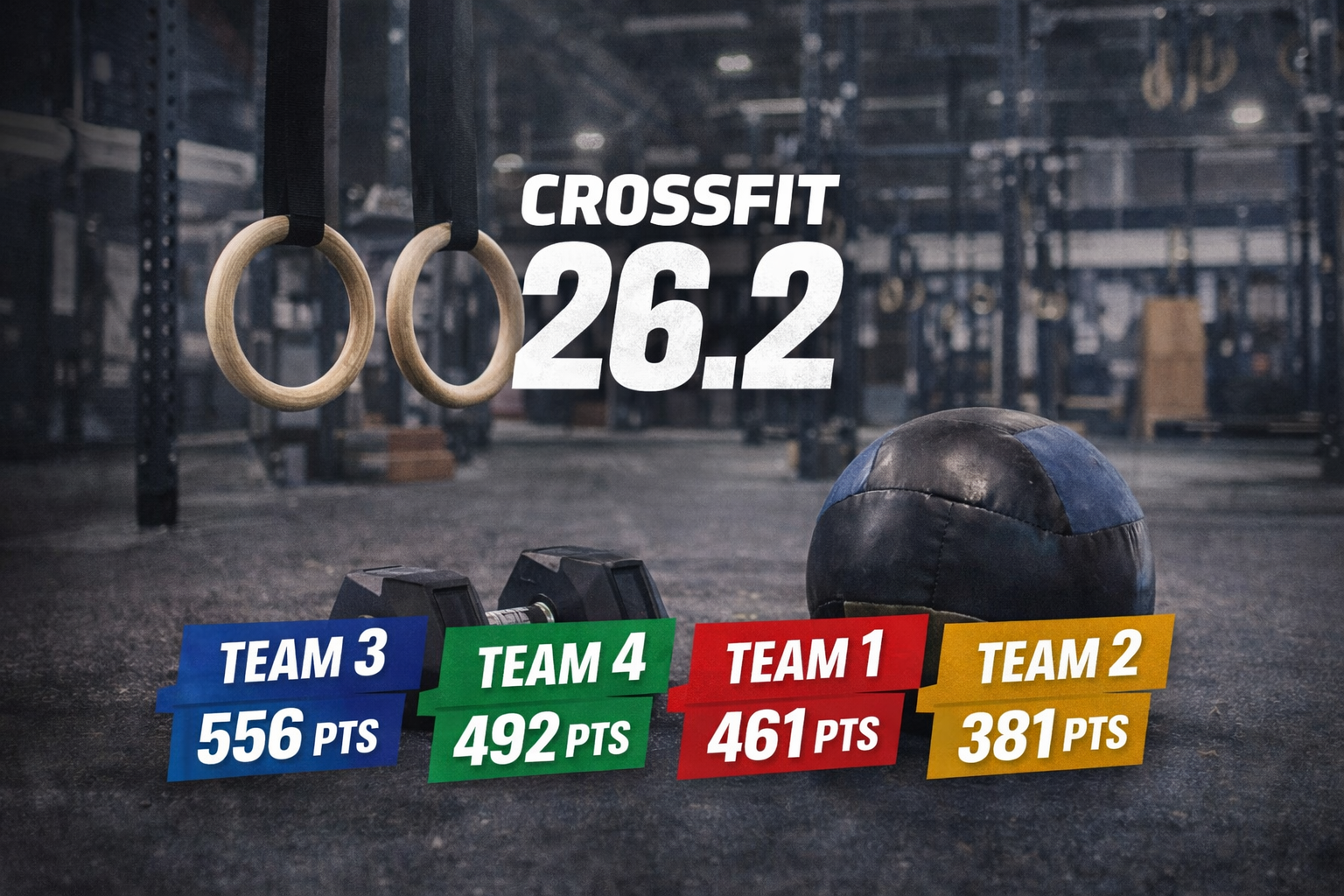
26.2 Highlights: Training, Competition, and the Intramural Open
Every year the CrossFit Open brings a new level of excitement into the gym. The energy rises, the workouts get spicy, and the community rallies around each other in ways that remind us why we train in the first place. This week’s reel captures exactly that—clips from Open Workout 26.2 mixed with moments from last week’s training, showcasing the effort, grit, and community spirit inside the gym.
If you haven’t seen it yet, check out the highlight reel here:
https://www.instagram.com/p/DVpHxztEbb5/
The Challenge: Open Workout 26.2
This week’s test pushed athletes through a demanding combination of overhead stability, grip endurance, and high-skill gymnastics.
Workout 26.2
For Time
• 80 ft Dumbbell Overhead Walking Lunge
• 20 Alternating Dumbbell Snatches
• 20 Pull-Ups
• 80 ft Dumbbell Overhead Walking Lunge
• 20 Alternating Dumbbell Snatches
• 20 Chest-to-Bar Pull-Ups
• 80 ft Dumbbell Overhead Walking Lunge
• 20 Alternating Dumbbell Snatches
• 20 Ring Muscle-Ups
From the very first lunge, athletes had to manage shoulder fatigue while maintaining control overhead. The snatches kept the heart rate high, and the pulling movements escalated in difficulty as the workout progressed—from pull-ups, to chest-to-bar, and finally the ultimate separator: ring muscle-ups.
It’s the kind of workout that rewards pacing early and demands everything you have at the end.
Intramural Open Standings After 26.1
Before diving into this week’s results, let’s take a look at where the teams stood after Week 1 (Workout 26.1).
Current standings:
Team 3 – 556 pts
Team 4 – 492 pts
Team 1 – 461 pts
Team 2 – 381 pts
Team 3 came out strong in the opening week and currently holds the lead, but with multiple weeks left in the Intramural Open, the leaderboard can change quickly. Every workout, every athlete, and every point matters.
Top Performances from 26.1
Week 1 delivered some impressive performances across the gym.
Top Male Performances
Grant Griffin – 308 reps
Cole Scott – 305 reps
Ryan Allen – 292 reps
Ean Parr – 279 reps
Trevor Lampe – 263 reps
These athletes set the pace early in the Open and helped push the competitive energy across every heat.
Top Female Performances
Jessica Phillis – 270 reps
Hope Haugh – 257 reps
Natalie Gordon – 237 reps
Sheri Kindred – 229 reps
Kristin Humphries – 217 reps
Each of these performances helped their teams climb the leaderboard and demonstrated what the Open is all about—showing up, pushing limits, and seeing what you’re capable of.
More Than Just a Workout
The Open is never just about scores or leaderboards. It’s about community, challenge, and growth. Every athlete in the gym—whether chasing the leaderboard or completing their first Open workout—contributes to the experience.
The reel from this week captures that spirit perfectly: athletes grinding through tough reps, teammates cheering them on, and the shared satisfaction that comes from finishing something hard.
And with several weeks still ahead in the Intramural Open, the competition is only heating up.
Stay tuned for more highlights, workouts, and leaderboard updates as we continue through the Open.
Bragging Board:
Check out the CrossFit Games Leaderboard to keep up with the Top Performers at CrossFit Bound and compare to everyone in the world
Check Out our Weekly Training Highlight Reel Below
Upcoming Brithdays & Anniversaries
Anniversaries
4-Years
Steven Shaw March 28
3-Years
Cody Porter March 27
Dylan Porter March 27
2-Year
Luke Marben March 15
Francis Rivera March 27
Cody Cobb March 25
Alex Falcon March 9
1-Year
Alyssa Winkler March 28
Richard Brantely March 17
Birthdays
Winfred Brown March 7
Tiffany Rivera March 10
Brooklyn Shaw March 11
Samantha Joering March 18
Cody Porter March 21
Sam Stark March 22
Kerry Aponte March 23
Mary Turner March 28
Nicolas White March 29
Brian Chambers March 30
February’s Attendance Totals
Total Attendance: 1,392
Class Averages
5:30 am - 13.7
12 pm - 9.85
5:15 pm - 9.8
4 pm - 9.65
9 am - 8.58
6:30 pm - 6.31
6:30 am - 4.6
Fanny Pack-92 (aka katherines husband) 18
BAM 18
Casey Linch 18
Emily Conaster 17
Hannah Spratlen 17
Santez Kindred 17
Brian Lawler 17
Christopher Kibbe 17
Wilnetter Torres 17
Elysia Dunlap 16
Matthew Kimm 16
Fatih Sen 16
Bound Committed Club
Jeb Buffington - 26
Julie Chambers 24
Sheri Kindred 24
Michael Jamorski 23
Brittany Karneol 23
Kyle Rice 22
Mary Turner 22
Natalie Gordon 21
Michael Rivera 21
Nicolas White 20
Randy Joering 20
Matt Schuster 20
Melanie Venable 19
Ryan Boone 19
Dylan Porter 19
Elain Dunbar 19
A New Look. A Better Experience. More Tools for Your Success.
We’re excited to officially roll out the updated CrossFit Bound website and new branding, and it represents more than just a fresh look. It’s part of our continued commitment to helping every member train smarter, stay consistent, and reach their goals faster.
The new site features our updated CrossFit Bound logo and brand design, reflecting the strength, professionalism, and community that make this gym special. But beyond the visual upgrade, the real value lies in what’s now available for our members.
We will be Introducing the CrossFit Bound Member Resource Hub
One of the biggest upcoming additions to the website is our new Member Resource Section. This will be designed to give you a complete breakdown of everything we do inside the gym so you can fully understand the program and how it helps you succeed.
Inside the resource hub you’ll find guidance on:
How our training program is structured
Why we program strength, conditioning, and skill development the way we do
How to approach workouts for progress and longevity
How to develop and maintain healthy habits
Nutrition and recovery strategies
How to stay consistent and build long-term results
Our goal is simple: remove the guesswork so you can focus on what matters most—showing up and putting in the work.
Built to Help You Succeed
At CrossFit Bound, we believe training should give you the tools to become stronger, healthier, and more capable in everyday life. The updated website and resources are designed to support that mission by giving members clarity, education, and direction along the way.
Whether you’re new to the gym or have been training with us for years, the new platform will help you better understand the process that leads to results.
Take some time to check out the new CrossFit Bound website, check out the updated design, and will update you when the new member vault will be ready.
Because when you understand the process, success becomes repeatable.
Upcoming Events & Clinics
CROSSFIT OPEN - FEBRUARY 26 through MARCH 16
- Jan 14th is the opening day for registration. Let’s represent this year!
- HERE are more details.
Barbell Club starts back on Thursday February 19th
Bound Run/Sprint Club meeting at 7:30am on Saturday mornings at Kennesaw Mountain High School
Friday Night Lights
Feb 27
March 6
March 13
Article of the Week: CrossFit Defined Fitness Over 20 Years Ago. Why Is Everyone Still Guessing?
By Stephane Rochet - CF Lvl 3
On a recent Rich Roll podcast, Roll’s guest was Dr. Andy Galpin, a well-respected performance coach and researcher. At the very beginning of the interview, Roll asked Galpin, “What is fitness?” and commented that he was asking because discussing fitness requires a functional definition. CrossFit had this very same thought over 20 years ago, and when we went in search of a workable definition, we found, to our dismay, that a suitable one did not exist. So we created our own — more on that in a second.
As I listened to the next few minutes of the interview of Roll and Galpin bouncing ideas back and forth, I felt like I was witnessing what the CrossFit team initially went through as they bandied about words and phrases to come up with a definition of fitness. Galpin made two remarks that directly aligned him with our definition. First, he suggested that “your fitness is your ability to express a power output … or to do something.” Galpin also stated that fitness is an expression of one’s capacity. He’s right there!
But here’s the thing. Had I been sitting in the podcast studio watching these two brainstorm, I would have been sure I was getting punked. I would have been searching for the hidden-camera crew and waiting for the host to walk in, capturing my stunned reaction that these two experts didn’t seem to realize that a concise, measurable, observable, and repeatable definition of fitness already exists, because CrossFit created it over 20 years ago.
Instead of assuming our definition of fitness is common knowledge even among industry experts, we need to keep shouting to the world that we have the definition they need. So here is CrossFit’s definition of fitness. We invite anyone to use it. If you don’t like it, then come up with your own, but ours is really good and really robust.
CrossFit defines fitness as work capacity across broad time and modal domains. This means we measure and compute fitness by the power output an individual can produce across a hypothetically unlimited set of tasks or workouts, across an unlimited number of time domains, from the shortest sprint to the longest challenge we can imagine. It’s a measure of the work an athlete can do in a given amount of time, averaged across all tasks. See how Galpin was right on track?
To support our definition, we have four standards or models that explain what we’ve seen in the real world with hundreds of thousands of athletes, and these models support the reasoning behind our definition.
The Four Models
#1 – The 10 General Physical Skills
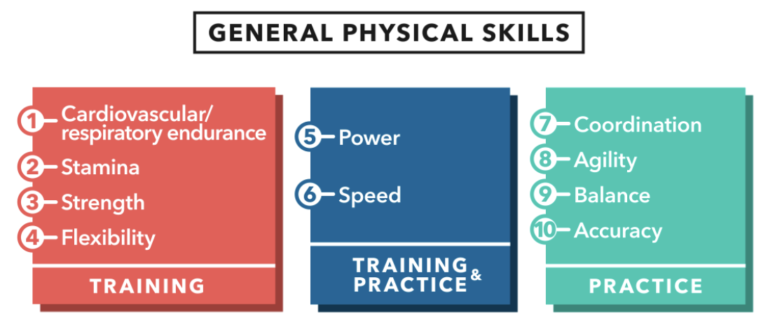
CrossFit proposes that there are 10 general physical skills any fitness program should develop: cardiovascular/respiratory endurance, stamina, strength, flexibility, power, coordination, agility, balance, and accuracy. An athlete is as fit as they are competent in each of these 10 skills. A program develops fitness to the extent that it improves each of these 10 skills. We want good capacity in all ten skills and balanced capacity across the list.
#2 – The Hopper
The essence of this model is the view that fitness is about performing well at any and every task imaginable. This model suggests your fitness can be measured by your capacity to perform well, in relation to other individuals, at any and all tasks pulled randomly from the hopper. The implication here is that fitness requires the ability to perform well at all tasks, even unfamiliar ones, in infinitely varied combinations. Nature frequently provides largely unforeseeable challenges; we train for that by striving to keep the training stimulus broad and constantly varied.
#3 – The Metabolic Pathways
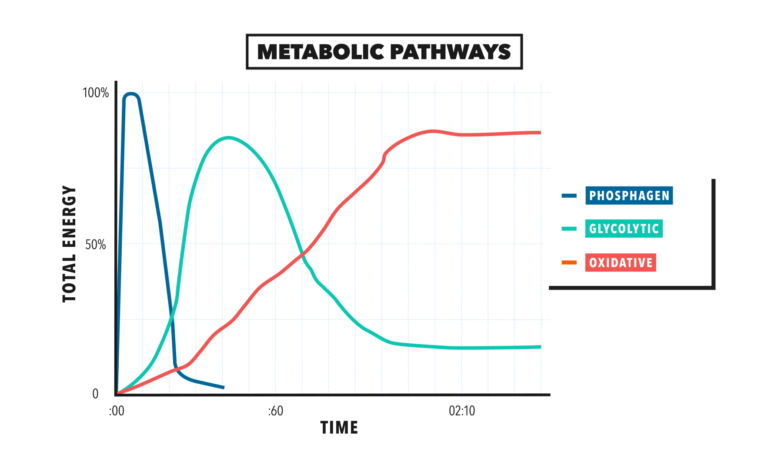
Three metabolic pathways provide the energy for all human action. These “metabolic engines” are known as the phosphagen pathway, the glycolytic pathway, and the oxidative pathway. Total fitness, the fitness that CrossFit promotes and develops, requires competency and training in each of these three pathways. Balancing the effects of these three pathways largely determines how and why we do metabolic conditioning, or “cardio,” at CrossFit. We do not favor one or two pathways to the exclusion of the others, and we recognize the impact of excessive training in the oxidative pathway, which is common in so many other fitness programs.
#4 – The Sickness, Wellness, Fitness Continuum
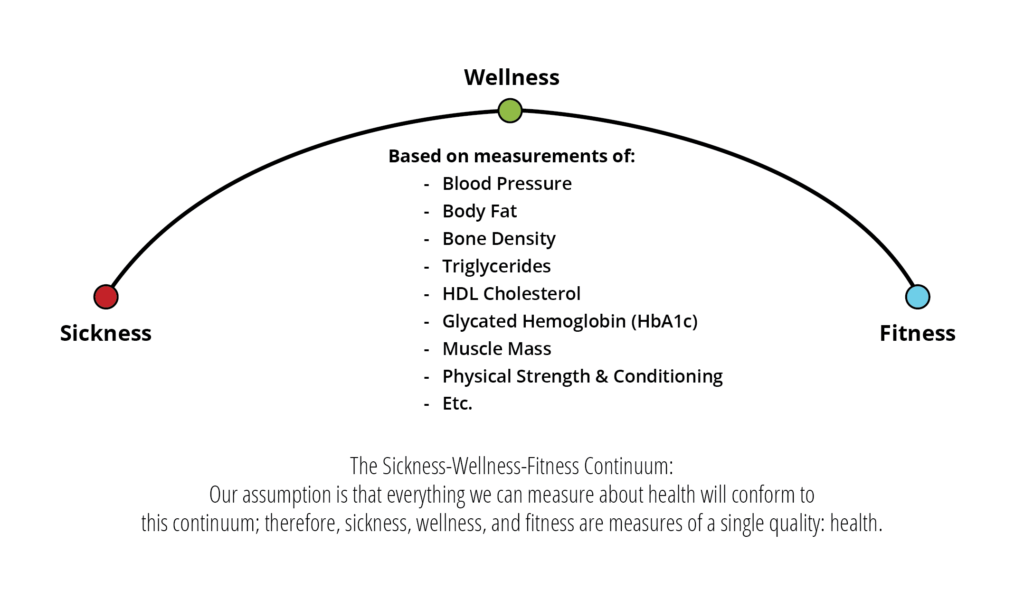
Every measurable value of health can be placed on a continuum that ranges from sickness to wellness to fitness — blood pressure, cholesterol, bone density, body fat, even mental health factors. The point to drive home here is that, done right, fitness provides a significant margin of protection against the ravages of time and disease. Fitness is and should be “super-wellness.” Sickness, wellness, and fitness are measures of the same entity. A fitness regimen that doesn’t support health is not CrossFit.
These standards ensure the broadest and most general fitness possible. CrossFit advocates and develops a fitness that is deliberately broad, general, and inclusive. Our fitness, or being “CrossFit,” comes from molding men and women who are equal parts gymnast, Olympic weightlifter, and multi-modal sprinter, or “sprintathlete.” Develop the capacity of a novice 800-meter track athlete, gymnast, and weightlifter, and you’ll be fitter than any world-class runner, gymnast, or weightlifter. Our specialty is not specializing.
This is a critical piece that is often missed or criticized by others who forget that CrossFit aims to build the healthiest and fittest people over the entirety of their lives. Critics often conflate CrossFit’s methodology with CrossFit Games athleticism — they’re not the same. Walk into any affiliate, and you’ll find the real story: people of all ages and abilities getting stronger, healthier, and more capable for the long haul. That’s the design. Games athletes represent an extraordinary pursuit that extends far beyond what CrossFit prescribes for optimal health and fitness. They train at volumes and intensities that would break most people, chasing a level of performance that, while inspiring, isn’t the goal for the vast majority. Affiliates don’t program for podium finishes; they program for parents, workers, retirees, and everyone in between who simply want to show up stronger tomorrow than they were yesterday, and still be moving well decades from now.
Over 20 years ago, CrossFit delivered to the world the definition of fitness. It works for all types of athletes and can be adapted for any population. It makes it possible to measure current fitness levels, identify weaknesses, and measure improvements or decreases in fitness. No one has offered a better or more useful one. Years ago, we had to define fitness so we could talk about it and compare fitness programs to demonstrate the value of CrossFit. Today, others may spend time creating their own definition because they don’t know ours exists, or because their program does not compare favorably to CrossFit when fitness is properly defined. Hopefully, this article will help solve the former problem. Their latter problem cannot be solved other than by adopting CrossFit.
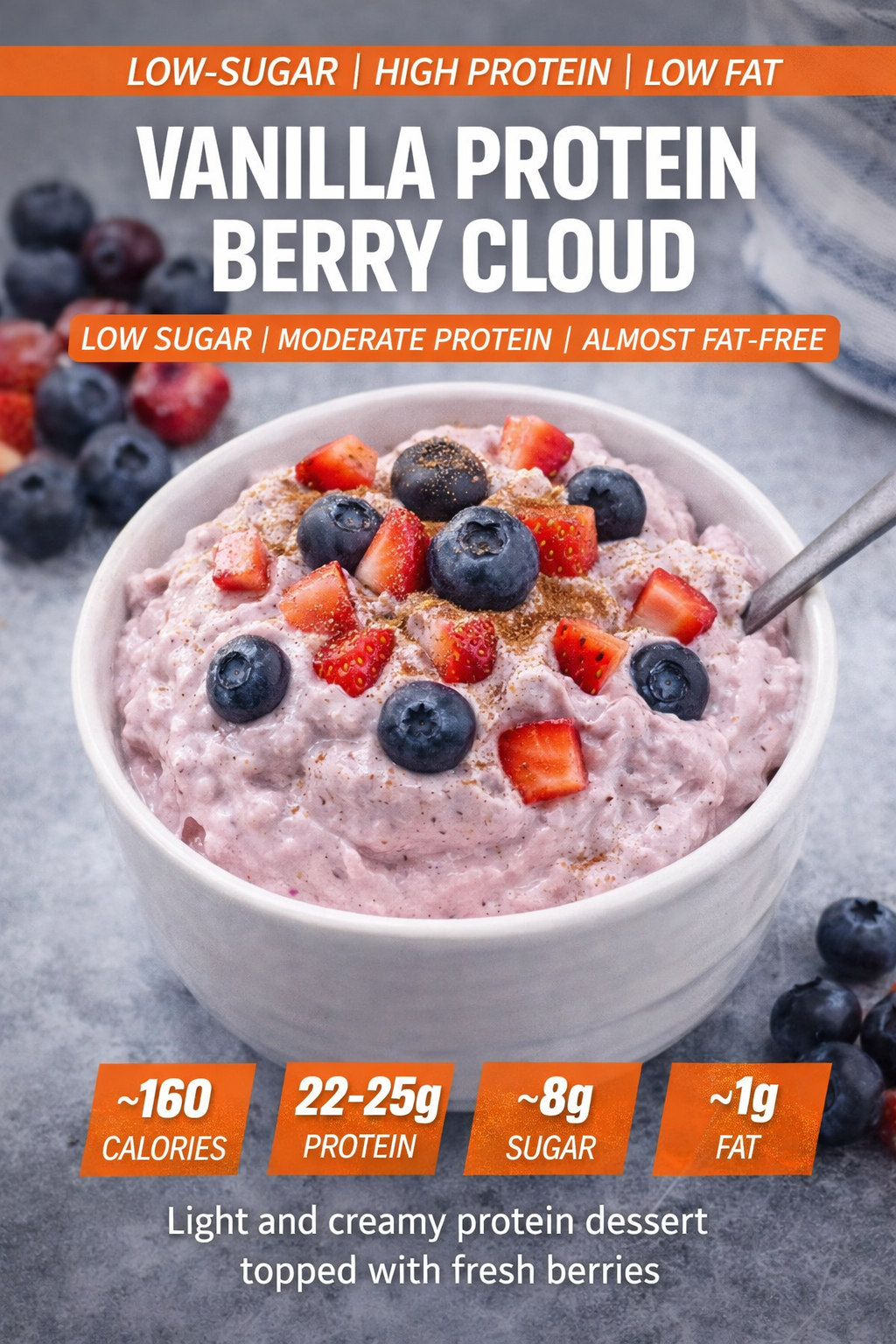
Recipe of the Week: Vanilla Protein Berry Cloud
Low Sugar | Moderate Protein | Almost Fat-Free
This dessert is light, creamy, and slightly sweet with fresh berries. It’s great after dinner or as a post-workout snack when you want something satisfying without heavy calories.
Instructions
In a bowl, combine the Greek yogurt, protein powder, almond milk, pudding mix, and vanilla extract.
Whisk or blend until smooth and fluffy.
Let the mixture sit in the refrigerator for 5–10 minutes to thicken.
Top with fresh berries.
Sprinkle cinnamon or cocoa powder if desired.
Why This Dessert Works
1. High protein without excess calories
The Greek yogurt and whey isolate help support recovery and satiety.
2. Very low fat
Using nonfat yogurt keeps the dessert light and easy to digest.
3. Naturally sweet with minimal sugar
Berries provide flavor and antioxidants without adding much sugar.
💡 Variation: Freeze the mixture for 45–60 minutes and stir halfway through to create a protein frozen yogurt dessert.
Ingredients (1–2 servings)
1 cup nonfat Greek yogurt
½ scoop vanilla whey or whey isolate protein
½ cup unsweetened almond milk
½ cup fresh strawberries or blueberries
1 tbsp sugar-free vanilla pudding mix (helps create a thick texture)
½ tsp vanilla extract
Optional:
1 packet stevia or monk fruit sweetener
cinnamon or cocoa powder for flavor
Nutrition (Approx.)
Per serving:
Calories: ~160
Protein: 22–25g
Carbohydrates: 8–10g
Sugar: ~5g (mostly from berries)
Fat: 0–1g